In today’s digital world, almost everything we do involves data. We use websites to shop, apps to communicate, online banking to manage money, and social media to stay connected with friends and family. Every one of these activities can create or share personal information. This makes data protection more important than ever.
Data protection is the practice of keeping personal and sensitive information safe from unauthorized access, misuse, loss, theft, or accidental disclosure. It is not only a concern for large companies and government organizations. Individuals, small businesses, schools, healthcare providers, and virtually every organization that handles information need to take data protection seriously.
As cyber threats continue to become more sophisticated, protecting information requires more than simply using a password. It involves a combination of technology, security policies, responsible behavior, and awareness.
What Is Data Protection?
Data protection refers to the methods and practices used to safeguard information throughout its entire lifecycle. This includes how data is collected, stored, accessed, transferred, processed, and eventually deleted.
Personal data can include obvious details such as a person’s name, phone number, home address, email address, and date of birth. It can also include more sensitive information, such as financial records, medical information, passwords, identification numbers, and employment details.
The main purpose of data protection is to make sure that information is available to authorized people when needed while preventing unauthorized individuals from accessing or abusing it.
Effective data protection generally focuses on three important principles: confidentiality, integrity, and availability. Confidentiality means that only authorized people can access information. Integrity means that data remains accurate and is not changed without permission. Availability means that authorized users can access the information when they need it.
Why Is Data Protection Important?
The amount of digital information being created every day is enormous. Businesses collect customer details, employees share workplace information, and individuals store personal documents online. While this makes everyday activities more convenient, it also creates opportunities for cybercriminals.
A data breach can have serious consequences. Personal information may be stolen and used for identity theft, fraud, scams, or other criminal activities. For businesses, a security incident can result in financial losses, legal problems, reputational damage, and a loss of customer trust.
Data protection also matters because people expect organizations to treat their information responsibly. When someone provides personal information to a company, they generally expect it to be used for a legitimate purpose and protected from unnecessary exposure.
Strong protection therefore helps build trust. Customers are more likely to use a service when they believe their information is being handled carefully.
Common Threats to Data Security
There are many different threats that can put information at risk. Understanding these threats is an important part of developing an effective protection strategy.
Phishing
Phishing is one of the most common methods used by attackers. A criminal may send an email or message that appears to come from a trusted company, colleague, or service. The goal is often to convince the recipient to reveal a password, click a malicious link, or provide sensitive information.
Weak Passwords
Simple or reused passwords can make it easier for attackers to gain access to accounts. Using the same password across several services is particularly risky because one compromised account can potentially lead to access to other accounts.
Malware
Malicious software, commonly known as malware, can infect computers and mobile devices. Some malware can steal information, monitor activity, damage files, or give attackers unauthorized access to a system.
Insider Risks
Not every security problem comes from outside an organization. Employees or other authorized users may accidentally expose information or intentionally misuse it. Poor access controls can make these incidents more damaging.
Lost or Stolen Devices
Laptops, smartphones, USB drives, and other devices can contain valuable information. If a device is lost or stolen and is not properly protected, someone else may be able to access the data stored on it.
How Can Personal Data Be Protected?
Protecting personal information does not always require expensive technology. Several simple habits can significantly improve security.
One of the first steps is to use strong, unique passwords. A good password should be difficult to guess and should not be reused across multiple accounts. Password managers can also help people create and securely store complex passwords.
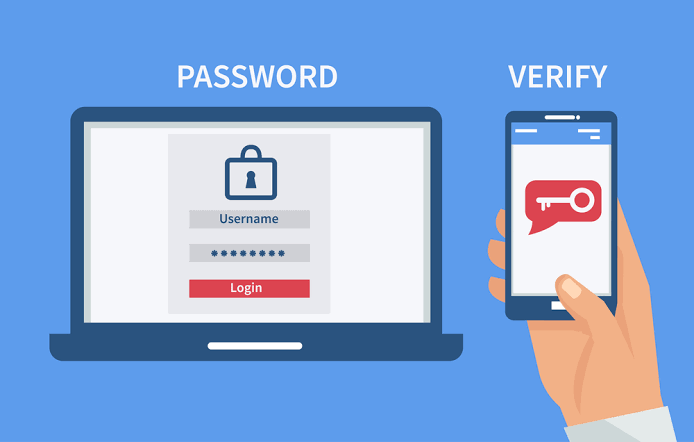
Two-factor authentication provides another important layer of protection. Instead of relying only on a password, it requires an additional verification method, such as a code, authentication app, or security key.
People should also be careful when opening emails, downloading files, or clicking links. If a message creates a sense of urgency or asks for sensitive information unexpectedly, it is worth checking its authenticity before taking action.
Keeping software and operating systems updated is equally important. Updates often contain security fixes that address known vulnerabilities.
Another useful practice is to regularly review account settings and remove access that is no longer necessary. Important files should also be backed up so that they can be recovered if a device fails or becomes infected with malicious software.
Data Protection for Businesses
For businesses, data protection should be treated as an ongoing responsibility rather than a one-time project.
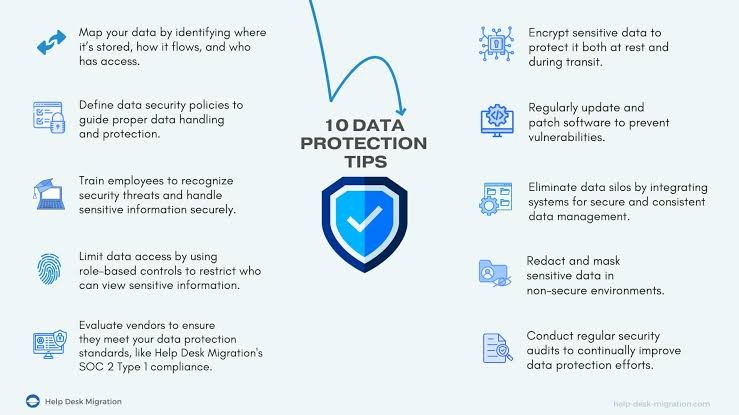
Organizations should first identify what information they collect and determine why they need it. Collecting unnecessary information increases risk, so businesses should avoid gathering data that has no clear purpose.
Access should also be limited according to job responsibilities. Employees do not necessarily need access to every file or database within an organization. Giving users only the permissions they need can reduce the potential impact of compromised accounts.
Encryption is another valuable security measure. It can make information much harder to understand if unauthorized people gain access to it.
Businesses should also create clear security policies and provide regular employee training. Even advanced security systems can be undermined by a simple human mistake, so employees need to understand how to recognize suspicious activity and handle sensitive information.
Regular security assessments can help organizations discover weaknesses before criminals find them. Companies should also have an incident response plan so they know what to do if a breach occurs.
The Role of Privacy in Data Protection
Data protection and privacy are closely connected, but they are not exactly the same thing.
Privacy is largely about how personal information is collected, used, shared, and handled. Data protection focuses more specifically on the measures used to keep that information secure and properly managed.
For example, a company may collect a customer’s email address to provide a service. Privacy considerations involve whether the company has a legitimate reason to collect and use that information. Data protection involves ensuring that the email address is stored securely and is not exposed to unauthorized people.
Responsible organizations should consider both privacy and security when handling personal information.
Data Protection and Legal Responsibilities
Many countries have laws and regulations governing how organizations handle personal information. These rules can establish requirements for collecting, processing, storing, sharing, and deleting data.
The exact requirements depend on the country, industry, and type of information involved. Some regulations also give individuals rights concerning their personal information.
For businesses operating internationally, data protection can become even more complicated because they may need to follow requirements in multiple jurisdictions.
Organizations should therefore understand which rules apply to their activities and seek professional legal or compliance advice when necessary.
Building a Strong Data Protection Strategy
A strong data protection strategy should combine people, processes, and technology.
First, organizations should understand what information they possess and where it is stored. They should then identify possible risks and determine which information requires the strongest protection.
Security controls should be implemented based on those risks. These may include encryption, access controls, authentication systems, backups, monitoring, and secure data deletion.
Employee education should be part of the strategy as well. People are an important part of cybersecurity, and regular training can reduce mistakes.
Finally, data protection should be reviewed regularly. Technology changes, new threats appear, and organizations’ needs evolve. A security strategy that worked several years ago may not provide sufficient protection today.
The Future of Data Protection
As technologies such as artificial intelligence, cloud computing, connected devices, and automated systems continue to develop, the amount and complexity of data will also increase.
This creates new opportunities but also introduces new security challenges. Organizations will need to think carefully about how data is collected and processed by automated systems and how access to sensitive information is controlled.
Individuals will also need to become more aware of their digital footprint. Understanding what information is being shared and making thoughtful decisions about online accounts can make a meaningful difference.
The future of data protection will likely depend on a combination of stronger technology, better regulations, responsible business practices, and informed users.
Frequently Asked Questions
1. What is data protection in simple terms?
Data protection means keeping personal and sensitive information safe from unauthorized access, theft, misuse, loss, or accidental exposure. It involves security technologies, policies, procedures, and responsible user behavior.
2. Why is data protection important for businesses?
Data protection helps businesses prevent data breaches, protect customer information, maintain trust, reduce financial risks, and meet applicable legal or regulatory requirements. A strong protection strategy can also reduce the potential damage caused by cyberattacks.
3. What is the best way to protect personal data?
There is no single solution that works for every situation. Using strong and unique passwords, enabling two-factor authentication, keeping software updated, avoiding suspicious links, securing devices, and backing up important information are all useful steps.
4. What happens if personal data is stolen?
Stolen information can potentially be used for identity theft, fraud, scams, unauthorized account access, or other harmful activities. The consequences depend on what information was exposed and how attackers use it.
5. Is data protection the same as data privacy?
No. Data privacy is mainly concerned with how personal information is collected, used, shared, and managed. Data protection focuses more on the safeguards and security measures used to protect that information. Both are important for responsible information management.
Conclusion
Data protection is no longer something that only technology experts need to worry about. It is an important part of modern digital life.
Whether you are an individual protecting personal accounts or a business managing customer information, basic security principles can reduce the risk of data loss and unauthorized access. Strong passwords, multi-factor authentication, software updates, encryption, employee training, regular backups, and appropriate access controls all have an important role to play.
Most importantly, data protection should be viewed as an ongoing process. There is no single tool that can eliminate every risk. By staying informed, reviewing security practices regularly, and treating personal information responsibly, individuals and organizations can create a safer digital environment.