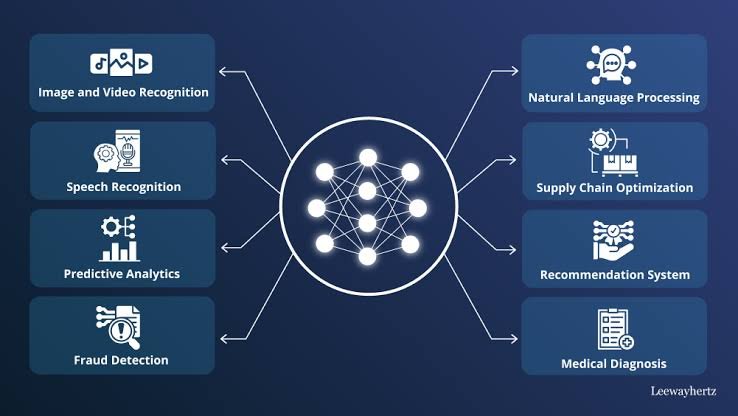
Technology has changed the way people work, communicate, shop, travel, and make decisions. Behind many of the modern technologies we use every day is a powerful branch of artificial intelligence known as Deep Learning. From voice assistants and facial recognition to medical diagnosis and self-driving vehicles, deep learning is helping computers perform tasks that once required human intelligence.
Although the term may sound complicated, the basic idea is easier to understand than it first appears. Deep learning allows computers to learn from large amounts of information and identify patterns without requiring humans to program every individual rule. As more data becomes available, these systems can become better at recognizing images, understanding language, predicting outcomes, and solving complex problems.
What Is Deep Learning?
Deep learning is a specialized area of machine learning that uses structures called artificial neural networks. These networks are inspired, in a simplified way, by the way the human brain processes information.
Traditional computer programs usually follow specific instructions written by developers. Deep learning works differently. Instead of telling a computer exactly how to recognize something, developers can provide a large collection of examples and allow the system to learn patterns from those examples.
For example, imagine teaching a computer to recognize cats in photographs. Rather than programming a long list of rules about ears, eyes, fur, and body shapes, a deep learning model can be trained using thousands or millions of labeled images. Over time, the model learns visual patterns that help it determine whether a new image contains a cat.
This ability to learn complex patterns is one of the main reasons deep learning has become so important in modern technology.
How Does Deep Learning Work?
At the heart of deep learning are neural networks made up of multiple layers. These layers process information step by step.
A typical neural network contains an input layer, several hidden layers, and an output layer. The input layer receives information, such as an image, sound recording, or text. The hidden layers process that information and identify increasingly complex patterns. Finally, the output layer produces a result.
Consider an image-recognition system. The first layers may identify simple features such as edges and colors. Deeper layers can combine those features to recognize shapes, objects, and eventually complete images.
During training, the model compares its predictions with the correct answers. When it makes a mistake, mathematical methods are used to adjust the network’s internal parameters. This process happens repeatedly across many examples. With enough training, the model can learn patterns that allow it to make useful predictions on information it has never seen before.
The amount of data and computing power available today has played a major role in the growth of deep learning. Modern graphics processing units and specialized AI hardware can perform the enormous number of calculations required to train large neural networks.
Deep Learning vs. Machine Learning
Deep learning and machine learning are closely related, but they are not exactly the same thing.
Machine learning is a broad field in which computers learn patterns from data to make predictions or decisions. Some machine learning techniques require humans to select and prepare important features before training.
Deep learning is a type of machine learning that can automatically learn useful features through multiple layers of neural networks. This makes it particularly powerful for complicated data such as images, videos, audio, and natural language.
For simple problems with limited data, traditional machine learning can sometimes be faster, cheaper, and easier to understand. For highly complex problems involving massive datasets, deep learning can offer significant advantages.
Major Applications of Deep Learning
Deep learning is already being used across many industries. Its applications continue to grow as researchers and businesses discover new ways to use the technology.
1. Healthcare
Healthcare is one of the areas where deep learning has significant potential. Models can analyze medical images, help identify patterns associated with certain diseases, and support healthcare professionals in making informed decisions.
For instance, deep learning systems can be trained to examine X-rays, CT scans, and other medical images. They may identify abnormalities that require further attention. These systems are generally intended to assist medical professionals rather than replace them.
Deep learning can also contribute to drug discovery, personalized treatment research, and the analysis of large medical datasets.
2. Computer Vision
Computer vision allows computers to understand and interpret visual information. Deep learning has transformed this field by making image and video recognition much more accurate.
Applications include facial recognition, object detection, quality inspection in factories, security systems, and image classification. Smartphones also use AI-powered image processing to improve photographs, recognize scenes, and organize pictures.
3. Natural Language Processing
Deep learning has dramatically improved the way computers work with human language. Natural language processing systems can analyze text, translate languages, answer questions, summarize information, and generate human-like responses.
Virtual assistants, chatbots, translation applications, and many modern search systems use neural networks to understand language and identify relationships between words and concepts.
4. Self-Driving Technology
Autonomous vehicles depend on their ability to understand their surroundings. Deep learning can help vehicles identify pedestrians, road signs, other vehicles, traffic lanes, and obstacles.
Cameras, radar, lidar, and other sensors generate large amounts of information. Deep learning models can process this information to help autonomous systems understand the environment and make decisions.
5. Finance
Financial organizations can use deep learning to analyze large datasets and identify unusual patterns. Potential applications include fraud detection, risk assessment, customer behavior analysis, and financial forecasting.
For example, a system may analyze transaction patterns and flag activity that appears significantly different from a customer’s normal behavior. Human experts can then investigate the alert.
Benefits of Deep Learning
One of the biggest advantages of deep learning is its ability to handle extremely complex patterns. When properly trained, a deep learning model can process enormous amounts of information and identify relationships that may be difficult to detect using traditional methods.
Another advantage is automation. Deep learning can perform repetitive analytical tasks quickly, allowing people to focus on work that requires judgment, creativity, and communication.
Deep learning can also improve over time when models are retrained using better data and appropriate techniques. In areas such as image recognition and speech processing, this ability has contributed to major improvements in performance.
The technology is also highly flexible. The same fundamental concepts can be adapted to different industries, including healthcare, education, transportation, entertainment, manufacturing, and finance.
Challenges and Limitations
Despite its impressive capabilities, deep learning is not a perfect technology.
One major challenge is the need for large amounts of high-quality data. A model trained on incomplete, inaccurate, or biased information can produce unreliable results. Collecting and preparing useful data can also require considerable time and resources.
Training large models can be expensive because it requires powerful computing hardware and significant amounts of electricity. Smaller organizations may struggle to afford these resources.
Another issue is interpretability. Some deep learning models contain millions or even billions of parameters, making it difficult to explain exactly why a model produced a particular prediction. This can be especially important in sensitive areas such as healthcare, finance, and law.
Bias is another serious concern. If training data contains unfair or unbalanced patterns, the resulting system may reproduce or even amplify those patterns. Responsible development therefore requires careful data selection, testing, monitoring, and human oversight.
The Future of Deep Learning
The future of deep learning is likely to involve systems that are more capable, efficient, and accessible. Researchers are working on methods that require less data and computing power while still achieving strong results.
One important direction is the development of models that can work with different types of information at the same time. Instead of processing only text or images, advanced systems can combine text, images, audio, video, and other forms of data.
Another major focus is efficiency. As AI models become larger and more powerful, reducing their energy consumption and computational requirements is becoming increasingly important.
Deep learning may also become more common in everyday software. Businesses can use it to automate routine tasks, analyze customer needs, improve products, and make better use of their data.
However, technological progress needs to be accompanied by responsible development. Privacy, security, fairness, transparency, and human oversight will remain important as deep learning systems become more deeply integrated into society.
How to Start Learning Deep Learning
Anyone interested in this field can begin with the fundamentals. A strong understanding of basic mathematics, statistics, and programming can make learning easier, although beginners do not need to master everything before getting started.
Python is one of the most popular programming languages for artificial intelligence and machine learning. Beginners can start by learning Python fundamentals and then move toward concepts such as supervised learning, neural networks, and model training.
Practical projects are particularly useful. Building a simple image classifier, text-analysis tool, or prediction model can help learners understand how theoretical concepts work in real situations.
It is also important to remember that deep learning is a broad field. Nobody needs to learn everything at once. Starting with basic concepts and gradually working toward more advanced topics is usually a more effective approach.
Frequently Asked Questions About Deep Learning
1. What is Deep Learning?
Deep Learning is a branch of artificial intelligence and machine learning that uses multi-layered neural networks to learn patterns from large amounts of data. It is commonly used for tasks such as image recognition, speech processing, language understanding, and prediction.
2. How does Deep Learning work?
Deep Learning works by processing data through multiple layers of an artificial neural network. During training, the model analyzes examples, identifies patterns, and adjusts its internal parameters to improve its predictions. With enough quality data and training, it can recognize complex patterns in new information.
3. What is the difference between Deep Learning and Machine Learning?
Machine Learning is a broad field that enables computers to learn from data, while Deep Learning is a specialized type of machine learning that uses multiple neural-network layers. Deep Learning can automatically discover complex features from large datasets, whereas many traditional machine learning methods rely more heavily on manually selected features.
4. Where is Deep Learning used?
Deep Learning is used in many industries and technologies, including healthcare, finance, transportation, cybersecurity, computer vision, voice assistants, recommendation systems, and natural language processing. It powers many AI features that people interact with in their daily lives.
5. Is Deep Learning difficult to learn?
Deep Learning can be challenging because it involves programming, mathematics, statistics, and machine learning concepts. However, beginners can learn it gradually by starting with Python and basic machine learning before moving on to neural networks and more advanced Deep Learning techniques.
Conclusion
Deep learning has become one of the most influential technologies in modern artificial intelligence. By using multilayer neural networks to learn complex patterns from data, it allows computers to perform tasks involving images, language, sound, prediction, and decision-making.
Its applications range from healthcare and finance to autonomous vehicles, computer vision, and natural language processing. At the same time, deep learning comes with challenges involving data quality, computing costs, bias, privacy, and explainability.
As research continues, deep learning is likely to become more efficient and capable. Its long-term impact will depend not only on how powerful these systems become but also on how responsibly people design, deploy, and manage them.
For students, professionals, and businesses, understanding the fundamentals of deep learning is becoming increasingly valuable. It is not simply a technology for the future anymore—it is already shaping the digital world around us.
Hi, this is a comment.
To get started with moderating, editing, and deleting comments, please visit the Comments screen in the dashboard.
Commenter avatars come from Gravatar.