Introduction
Artificial intelligence has changed significantly over the past few years. What once seemed like a technology limited to research laboratories and science fiction is now part of everyday life. From personalized recommendations and virtual assistants to fraud detection and autonomous robots, AI systems are becoming more capable of learning from information and adapting to changing situations.
One of the most fascinating developments in this field is the rise of self-learning AI systems. These systems can improve their performance by analyzing data, identifying patterns, receiving feedback, and adjusting their internal models. Rather than depending entirely on manually written instructions for every situation, they use experience to make better predictions or decisions.
Think about how a music streaming service gradually learns your listening preferences. At first, its recommendations may seem general. Over time, it can use your listening history, skipped songs, favorite artists, and other signals to suggest music that better matches your interests. Similarly, an AI system used in a warehouse may learn from operational data to improve how it organizes inventory or predicts demand.
However, self-learning AI is more complicated than simply allowing a machine to learn whatever it encounters. Systems need suitable data, carefully designed learning methods, reliable feedback, and safeguards to prevent mistakes from becoming repeated patterns.
As artificial intelligence continues to develop, understanding how machines learn from experience is becoming increasingly important for businesses, researchers, students, and everyday technology users.
In this article, we will explore what self-learning AI systems are, how they improve through experience, the technologies that make this possible, their real-world applications, and the challenges that must be addressed before they can be trusted in increasingly important roles.
1. What Are Self-Learning AI Systems?
Self-learning AI systems are artificial intelligence systems designed to improve their performance by learning from data, feedback, or interactions with their environment.
Traditional computer programs usually follow rules explicitly defined by developers. For example, a basic program might calculate a discount by applying a fixed percentage to a purchase. Its behavior changes only when someone modifies its instructions or the data it receives.
A learning-based system works differently. Instead of relying entirely on predefined rules, it uses algorithms to discover patterns and adjust its model based on examples or feedback.
Consider an email filtering system. A simple filter might block messages containing specific words. A machine learning system can examine examples of legitimate and unwanted emails, identify recurring characteristics, and learn to classify new messages.
When the system is retrained with additional reliable examples, its performance may improve.
The term self-learning can describe several different approaches. Some systems learn during an initial training process and then remain fixed during normal operation. Others periodically update their models as new information becomes available. More advanced systems may learn through interaction, experimentation, or feedback.
Importantly, not every AI system automatically improves whenever it receives new data. Some systems require developers to review information, retrain models, evaluate results, and approve updates before changes are deployed.
The defining idea is that learning algorithms can use experience to improve performance without requiring a person to manually specify every relationship the system must recognize.
2. How Do Machines Learn From Experience?
Machines do not experience the world in the same way humans do. They process information through mathematical models, algorithms, and computational procedures.
Even so, some learning processes share a useful similarity with human learning: performance can improve when a system receives relevant examples and feedback.
A typical learning process involves several stages.
Step 1: Collecting data
The system receives information relevant to its task. This may include photographs, text, sensor readings, customer transactions, spoken commands, or records of previous decisions.
For example, a system designed to predict traffic conditions might use historical traffic measurements, road information, weather data, and recent vehicle speeds.
The quality of this information matters. Incorrect, incomplete, or unrepresentative data can cause the system to learn misleading patterns.
Step 2: Identifying patterns
The learning algorithm examines the data and searches for relationships that help it complete a particular task.
A recommendation system may discover that users who enjoy certain films often appreciate other films with similar characteristics. A predictive maintenance system may learn that particular combinations of temperature, vibration, and operating speed are associated with equipment problems.
These relationships are represented within the model rather than stored solely as a list of manually written rules.
Step 3: Making predictions or decisions
After learning from suitable examples, the model can process new information and generate an output.
This could be a prediction, classification, recommendation, or suggested action.
For example, a system may estimate the likelihood that a machine will need maintenance within a certain period.
Step 4: Receiving feedback
The system’s output can be compared with an observed result or evaluated using a feedback mechanism.
If a prediction was inaccurate, the difference between the prediction and the actual outcome may help guide future training.
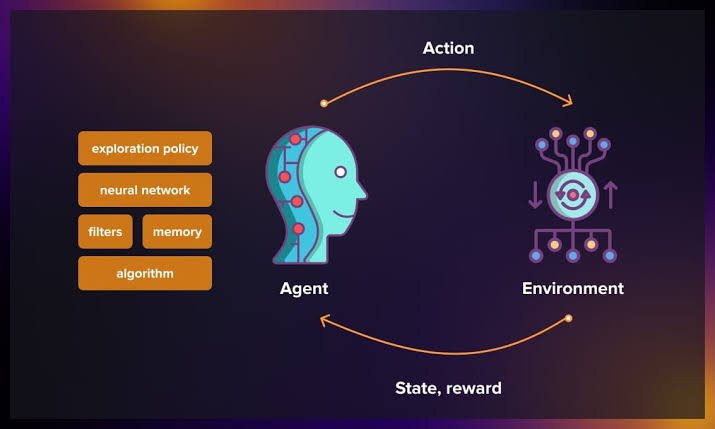
In reinforcement learning, feedback may take the form of rewards or penalties associated with actions.
Step 5: Updating the model
Depending on the learning method, the system may adjust its internal parameters, revise its representation of the data, or undergo additional training.
The updated model is then evaluated to determine whether its performance has improved.
This process can be repeated as new information becomes available.
However, improvement is not guaranteed. Poor feedback, misleading data, or inappropriate updates can make a model less accurate rather than more accurate.
3. The Main Types of Self-Learning AI
Several AI techniques allow systems to learn from experience. Each method is suited to different types of information and learning objectives.
Supervised learning
Supervised learning trains models using labeled examples. Each example contains an input and a corresponding expected output.
For instance, a system might learn to recognize defective products using photographs labeled as either acceptable or defective.
The model compares its predictions with the known labels and adjusts its parameters to reduce errors.
This approach is widely used in image classification, fraud detection, forecasting, and many other applications.
Although supervised learning can improve as additional labeled examples become available, creating reliable labels may require considerable human effort.
Unsupervised learning
Unsupervised learning examines data without predefined target labels. The goal is often to discover patterns, similarities, clusters, or unusual observations.
A retailer might use this approach to identify customer groups based on purchasing behavior. A cybersecurity system might analyze network activity to identify patterns that differ from typical operations.
These discoveries can help people understand complex datasets or identify areas requiring further investigation.
However, a pattern discovered by an algorithm is not automatically meaningful. Human interpretation and additional validation may be needed.
Reinforcement learning
Reinforcement learning allows an agent to learn through interaction with an environment.
The agent selects actions and receives rewards or penalties according to the results. Over time, it attempts to develop a strategy that produces better outcomes.
This method has been used in game-playing systems, robotics research, resource management, and certain control problems.
For example, a simulated robot might learn how to move through an environment by testing actions and receiving feedback about its progress.
Reinforcement learning can be powerful, but it may require many interactions, careful reward design, and extensive testing before a learned strategy can be used safely in the real world.
Self-supervised learning
Self-supervised learning is particularly important in modern AI development. It allows models to learn from large amounts of data by generating training objectives from the data itself.
A language model, for example, may learn by predicting missing or subsequent portions of text. A vision model may learn useful representations by examining relationships among parts of images.
This approach can reduce dependence on manually labeled examples and help models develop general capabilities that can later be adapted to specific tasks.
Self-supervised learning is one of the techniques that has helped make large language models and other modern AI systems possible.
Together, these approaches demonstrate that machines can learn in different ways depending on the available data, feedback, and objectives.
4. How AI Systems Improve Over Time
A major advantage of learning-based systems is their potential to adapt when conditions change.
However, improvement over time does not always mean that a model is continuously rewriting itself while people use it. Many systems improve through carefully managed cycles of data collection, training, testing, and deployment.
Consider an online shopping recommendation system.
Initially, it may rely on general information about popular products. As it receives additional interactions, it can use information about clicks, purchases, product ratings, and browsing behavior to refine its recommendations.
The updated model may become more relevant to different users because it has access to more useful evidence.
A similar process occurs in predictive maintenance. A model trained on historical machine data may initially identify common warning signs. As additional verified examples of equipment failures become available, engineers may retrain the model to recognize patterns that were missing from its original training data.
Some systems also use online learning, where model parameters are updated incrementally as new observations arrive. This can be useful when data changes rapidly, but it requires safeguards to prevent unreliable observations from damaging the model.
In other settings, models are updated on a schedule or only after human review.
For AI to improve reliably, developers must measure performance using appropriate tests. They need to determine whether the updated system actually performs better on new data rather than simply becoming more familiar with its previous examples.
Experience provides an opportunity for improvement, but reliable evaluation is what helps establish whether that improvement has occurred.
5. The Role of Feedback in Machine Learning
Feedback is one of the most important elements of learning-based AI.
Without a useful way to assess its outputs, a system may struggle to determine whether its predictions or decisions are appropriate.
Feedback can come from different sources.
In supervised learning, feedback comes from known labels or target values. A model predicting delivery times can compare its estimates with actual delivery times and use the differences during training.
In reinforcement learning, the system receives rewards based on its actions. A robot might receive a positive reward for reaching a destination successfully and a penalty for colliding with an obstacle in a simulated environment.
In recommendation systems, user interactions can provide indirect feedback. A click, purchase, or saved item may indicate interest, although these signals do not always reveal a person’s true preferences.
Human feedback is also important. People may compare AI-generated responses, identify errors, or judge whether an output follows specific requirements. These judgments can be used in training and evaluation.
However, feedback can be misleading.
A user might click an article because its headline is confusing rather than because the content is useful. A system that treats every click as a positive signal could learn to prioritize attention-grabbing material instead of reliable information.
Similarly, a reward function that measures the wrong objective can encourage undesirable behavior.
Developers must therefore design feedback mechanisms that reflect the real purpose of the system. They should also examine whether feedback is biased, incomplete, or easily manipulated.
Good feedback helps a model learn useful behavior. Poor feedback can reinforce the wrong lessons.
6. Self-Learning AI in Everyday Life
Although self-learning AI may sound like an advanced research concept, many people already encounter learning-based systems every day.
Personalized recommendations
Streaming platforms, online stores, and social applications use algorithms to estimate which content or products may interest individual users.
These systems can analyze previous interactions, preferences, and similarities among users or items.
As new information becomes available, recommendations may change. The result is a more personalized experience, although it can sometimes narrow the range of content users encounter.
Voice assistants
Voice assistants use AI technologies to interpret spoken language, recognize commands, and generate responses.
Some systems can adapt certain settings or preferences based on usage, while others rely primarily on pretrained models and configured personalization features.
Their ability to understand a command depends on factors such as audio quality, language, context, and model capabilities.
Email filtering
Email services use machine learning to identify likely spam, phishing attempts, and unwanted messages.
The systems may analyze sender information, message content, links, and other signals to estimate whether a message is suspicious.
As new threats emerge, providers can update detection models and filtering rules.
Navigation and traffic prediction
Navigation applications use historical information and current traffic data to estimate travel times and suggest routes.
Their predictions can change as road conditions, congestion, and incidents evolve.
Smart home technology
Some smart home systems use patterns of activity, sensor readings, or configured schedules to automate lighting, heating, and other functions.
However, a connected device is not necessarily self-learning simply because it is called smart. Many devices follow fixed schedules or manually configured rules.
These examples show that learning-based technology is already woven into daily activities, often operating behind the scenes.
7. How Businesses Benefit From Self-Learning AI
Businesses generate large amounts of information through sales, customer interactions, supply chains, financial transactions, and equipment operations. Self-learning AI can help turn this information into practical insights.
One major application is demand forecasting. Retailers can analyze historical sales, seasonal patterns, promotions, and other relevant variables to estimate future demand. Better forecasts can help organizations manage inventory and reduce waste.
Customer service is another area where AI can provide support. Systems can categorize incoming requests, suggest responses, retrieve relevant information, and route complex cases to appropriate employees.
Human oversight remains valuable because automated systems can misunderstand requests or provide unsuitable answers.
In manufacturing, predictive maintenance systems can analyze sensor readings to identify conditions associated with equipment failure. If these systems perform reliably, they can help maintenance teams prioritize inspections and reduce unexpected downtime.
Financial organizations also use machine learning to identify suspicious transactions, estimate risks, and detect unusual patterns.
Human resources, marketing, logistics, and cybersecurity teams may use AI to support their work as well, although each application requires appropriate controls and evaluation.
For businesses, the greatest benefit often comes from improving a specific process rather than adopting AI simply because it is popular.
Organizations should identify the problem they want to solve, determine whether suitable data is available, measure the results, and compare the benefits against implementation and maintenance costs.
8. Self-Learning AI and Autonomous Systems
One of the most significant developments in AI is the growing connection between learning systems and autonomous agents.
An autonomous system can observe information, make decisions, and perform actions with varying levels of human supervision. When combined with learning capabilities, it may improve aspects of its behavior through experience or feedback.
For example, a warehouse robot may use AI to recognize objects, plan movements, and navigate around obstacles. A learning component may help it improve performance in a controlled environment.
An AI software agent might use tools to organize information, prepare a report, or complete a multistep workflow. Feedback about successful and unsuccessful actions may help developers improve its planning methods or future model versions.
Nevertheless, autonomous action and self-learning are separate concepts.
A system can operate autonomously using a fixed model, and a learning system can operate without having permission to take independent actions.
Combining the two introduces additional challenges. A system that makes mistakes during analysis may also make mistakes while acting on the results.
For this reason, autonomous AI systems often need permission controls, action limits, monitoring, and clear procedures for handling unexpected situations.
High-impact actions should receive stronger safeguards than low-risk tasks. For example, an AI assistant might be allowed to organize a draft document automatically while requiring human approval before sending sensitive information or making a financial commitment.
The future of autonomous AI will depend not only on how effectively systems learn, but also on how reliably they operate within defined boundaries.
9. The Challenges of Self-Learning AI
Despite its potential, self-learning AI faces several important technical and ethical challenges.
Data quality
AI models depend on the information used to train and evaluate them. If the data contains errors, missing information, or misleading patterns, the system may learn the wrong relationships.
Collecting more data does not automatically solve this problem. Quality, relevance, and representativeness are equally important.
Bias and fairness
If training data reflects existing inequalities or underrepresents particular groups, a model may produce unfair results.
For example, a hiring-related system trained on historically biased decisions could learn patterns that disadvantage qualified applicants.
Organizations must assess data sources, evaluate outcomes across relevant groups, and establish procedures for identifying and correcting harmful behavior.
Privacy
Learning systems may process sensitive information, including personal communications, location information, health records, or financial activity.
Organizations should collect only the data they need, apply appropriate security measures, and follow applicable privacy requirements.
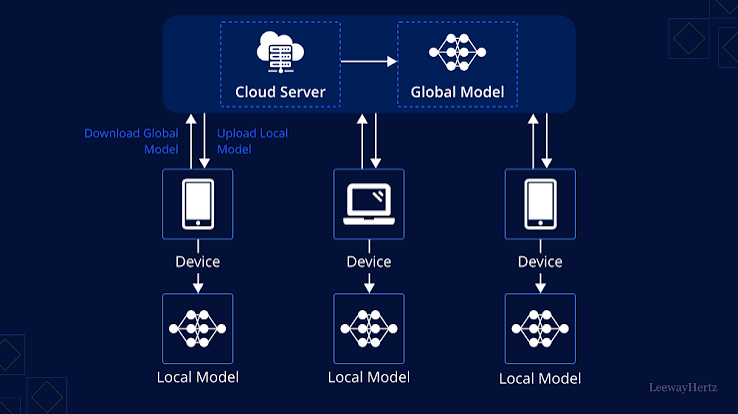
Some techniques, including federated learning and differential privacy, can help address particular privacy risks, although they do not eliminate every concern.
Unpredictable behavior
Models may perform well during testing but struggle when confronted with unfamiliar conditions.
A system trained on data from one environment might make unreliable predictions in another. This is particularly important for robotics, transportation, healthcare, and other applications where errors can have serious consequences.
High computational costs
Training and updating advanced models can require significant computing power, energy, and financial resources.
Organizations must determine whether the expected benefits justify these costs and whether a smaller, simpler model could perform the task effectively.
Security risks
AI systems can be manipulated through poisoned training data, malicious inputs, or attempts to exploit weaknesses in their design.
Learning systems therefore need security controls, careful testing, and monitoring throughout their operational life.
These challenges demonstrate why responsible AI development requires more than building a model that performs well on a test dataset.
10. Can AI Learn Continuously Without Human Help?
The idea of an AI system that continuously learns from everything it encounters is appealing, but real-world learning is more complicated.
Some models can update their parameters as new information arrives. Others need to be retrained periodically using carefully selected datasets.
Continuous learning can help systems adapt to changing conditions, but it introduces the risk of catastrophic forgetting. This occurs when learning new information causes a model to lose performance on previously learned tasks.
Another problem is feedback quality. If a model learns from inaccurate predictions or manipulated interactions, it may reinforce its own mistakes.
A continuously learning system could also become less reliable if its operating environment changes unexpectedly or if its training data becomes unrepresentative.
For these reasons, many organizations use controlled update processes. New data is collected, models are retrained or adjusted, and the results are evaluated before deployment.
Monitoring can help identify changes in data patterns or performance. Human reviewers may also investigate unusual behavior and determine whether a model should be updated, rolled back, or restricted.
In some applications, limited online learning is appropriate. In others, particularly high-risk environments, stable models and carefully approved updates may be safer.
The goal is not necessarily to remove human involvement completely. It is to build systems that can learn efficiently while remaining dependable, transparent enough for their intended use, and subject to appropriate oversight.
11. The Difference Between Learning and Human-Like Understanding
As AI systems become more capable, it is easy to assume that improving performance means they understand the world in the same way humans do.
However, learning patterns from data is not identical to human understanding.
An AI system may recognize objects, generate convincing explanations, or solve difficult problems without possessing human experiences, emotions, or awareness.
For example, a language model can learn statistical relationships among words and other representations through training. It may generate a useful explanation, but its output can still contain errors or unsupported claims.
Similarly, a recommendation system can predict what someone might watch without fully understanding why that person enjoys a particular film.
The distinction matters because people may place too much trust in systems that communicate fluently or appear confident.
AI performance should be evaluated through evidence, appropriate testing, and comparison with the requirements of the task.
A model’s ability to complete one task successfully does not establish that it can reason reliably in every situation.
Understanding these limitations allows developers and users to benefit from AI without assuming that it possesses human-like judgment.
12. How Researchers Measure Improvement
To determine whether a self-learning system is genuinely improving, researchers use evaluation methods designed for the task.
For a classification system, they might measure accuracy, precision, recall, or the rate of false positives and false negatives.
For a forecasting model, they may compare predictions with actual outcomes using measures such as mean absolute error.
For a recommendation system, they might evaluate whether suggested items are relevant, useful, and diverse.
In reinforcement learning, researchers may measure cumulative reward, success rates, or performance across different simulated environments.
However, a model’s performance on a single metric does not always capture the full picture.
A system might improve its overall accuracy while becoming less reliable for a particular group. A recommendation algorithm might increase engagement while reducing the diversity of content shown to users.
Therefore, evaluation should consider several relevant dimensions, including reliability, fairness, robustness, cost, and safety.
Researchers should also test models using data that was not used during training. This helps reveal whether a model can generalize to new situations.
After deployment, monitoring is important because real-world conditions can change. A model that performed well initially may become less accurate as customer behavior, environmental conditions, or underlying data patterns evolve.
Measuring improvement carefully helps distinguish genuine progress from changes that merely make a system appear successful.
13. The Future of Self-Learning AI
The future of self-learning AI will likely involve systems that adapt more efficiently, process multiple types of information, and operate across a wider range of applications.
One important direction is continual learning, which aims to help models acquire new information while retaining previously learned capabilities.
Researchers are also exploring more efficient learning methods that reduce the need for large labeled datasets and expensive computing resources.
Another development is the integration of AI with physical devices. Robots, industrial equipment, autonomous vehicles, and smart home systems may use learning algorithms to respond more effectively to changing environments.
Personal AI assistants may also become more adaptive, remembering permitted preferences and using feedback to tailor their responses and workflows.
Multimodal AI is another promising area. Systems that combine text, images, audio, video, and sensor information may be able to perform tasks that require several types of information at once.
At the same time, responsible deployment will remain essential. Privacy protections, cybersecurity, human oversight, and reliable evaluation must develop alongside technical capabilities.
Researchers will also need to address questions about accountability when an AI system learns from new information and subsequently makes an incorrect decision.
Progress will not be measured only by how much a machine can learn. It will also depend on how efficiently, safely, and consistently it can apply what it has learned.
Conclusion
Self-learning AI systems represent an important step in the development of intelligent technology. By learning patterns from data, using feedback, and adapting their models, these systems can improve performance on tasks ranging from personalized recommendations to predictive maintenance and complex data analysis.
Different techniques make this possible. Supervised learning uses labeled examples, unsupervised learning discovers patterns, reinforcement learning improves behavior through rewards, and self-supervised learning allows models to develop useful representations from data itself.
These methods already support many everyday technologies and are helping businesses improve efficiency, understand customer needs, and make better-informed decisions.
However, learning does not automatically guarantee improvement. Poor data, misleading feedback, bias, privacy risks, and changing environments can undermine a system’s performance. Continuous learning also requires careful management to prevent new information from damaging previously acquired capabilities.
The most effective AI systems combine strong learning methods with reliable evaluation, appropriate security, and clear human oversight.
As research continues, self-learning technology may become more adaptive, efficient, and widely accessible. It could help machines respond to changing conditions, support increasingly complex tasks, and make intelligent services more useful in everyday life.
Ultimately, the real promise of self-learning AI is not simply that machines can process more data. It is that carefully designed systems can use experience to become more useful and reliable over time. Achieving that goal will require technical innovation, responsible development, and a clear understanding of what AI can—and cannot—do.