Introduction
Artificial intelligence has become one of the most influential technologies of the modern era. From personalized recommendations and voice assistants to self-driving systems and intelligent chatbots, AI is changing how people interact with technology. Behind many of these innovations are two closely related concepts: machine learning and deep learning.
Although these terms are often used interchangeably, they do not mean exactly the same thing. Machine learning is a broad area of artificial intelligence that enables computers to learn patterns from data and make predictions or decisions without requiring every rule to be programmed manually. Deep learning is a specialized branch of machine learning that uses multilayered artificial neural networks to learn increasingly complex patterns.
Both technologies are important, but they differ in how they process information, the amount of data they may require, their computational demands, and the types of problems they are best suited to solve.
For example, a machine learning model might predict house prices using information such as location, size, and age. A deep learning model might analyze thousands of photographs to recognize objects, identify spoken words, or interpret complex visual patterns.
Understanding these differences is useful for students, business owners, developers, researchers, and anyone interested in modern technology. It can also help organizations decide which approach is most appropriate for a particular project.
In this article, we will explore machine learning and deep learning, examine their major differences, discuss real-world applications, and explain how to choose the right approach for different problems.
1. What Is Machine Learning?
Machine learning is a branch of artificial intelligence that allows computers to identify patterns in data and use those patterns to make predictions or decisions.
Traditional computer programs generally follow explicitly written instructions. A developer defines the rules, and the computer follows them to produce an output. Machine learning takes a different approach. Instead of manually programming every possible rule, developers provide data and an appropriate learning algorithm that can identify useful relationships.
Consider an example involving email spam detection. A traditional system might rely on a fixed list of suspicious words or manually written rules. A machine learning model can learn from previously labeled emails and identify patterns associated with spam.
As it processes suitable training examples, the model adjusts its internal parameters to improve its predictions. Once trained and evaluated, it can classify new emails it has not previously encountered.
Machine learning can be divided into several major categories.
Supervised learning
Supervised learning uses labeled examples, meaning the training data includes both the input and the expected output.
For example, a model trained to predict house prices may receive information about property size, location, and number of rooms, along with known sale prices.
Common supervised learning tasks include classification and regression.
- Classification predicts categories, such as whether a transaction is potentially fraudulent.
- Regression predicts numerical values, such as future sales or estimated delivery times.
Unsupervised learning
Unsupervised learning works with data that does not have predefined target labels. Its purpose is often to discover patterns, relationships, or groups within the information.
For example, a retailer might use clustering to identify groups of customers with similar purchasing habits.
Other applications include detecting unusual patterns, exploring datasets, and reducing the number of dimensions used to represent complex information.
Reinforcement learning
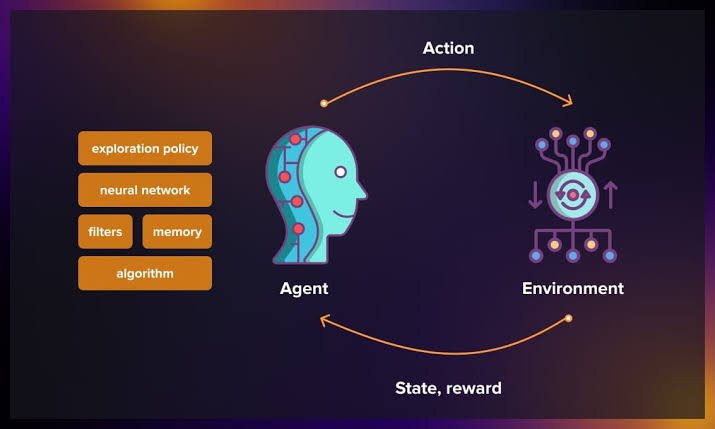
Reinforcement learning involves an agent learning through interaction with an environment. It receives rewards or penalties according to its actions and attempts to improve its strategy over time.
This approach can be used in robotics, game-playing systems, resource allocation, and certain forms of automated control.
Machine learning is a broad field with many algorithms and techniques. Some models are relatively simple and easy to interpret, while others are highly sophisticated.
The most suitable method depends on the available data, the task being solved, the required accuracy, and the practical limitations of the project.
2. What Is Deep Learning?
Deep learning is a specialized area of machine learning that uses artificial neural networks containing multiple layers of computational units.
These networks are loosely inspired by the structure of biological nervous systems, although artificial neural networks operate through mathematical computations rather than reproducing the full complexity of the human brain.
A typical neural network contains an input layer, one or more hidden layers, and an output layer. Information passes through the network, where mathematical operations transform it into a prediction or other output.
During training, the network compares its predictions with the desired results and adjusts its parameters to reduce errors. This process commonly involves backpropagation and an optimization algorithm.
The word “deep” refers to the use of multiple layers that allow a network to learn complex representations of information.
Imagine a deep learning model designed to recognize photographs of cats. Earlier layers may learn basic visual patterns, such as edges and textures. Later layers may combine these patterns into representations of shapes, facial features, and other characteristics useful for recognizing a cat.
This ability to learn representations directly from data is one of deep learning’s most important advantages.
Deep learning has contributed to major developments in image recognition, speech processing, language understanding, generative AI, and scientific research.
Different neural network architectures are designed for different kinds of tasks.
- Convolutional neural networks (CNNs): Historically important for image recognition and other visual tasks.
- Recurrent neural networks (RNNs): Designed to process sequential information, although many modern language systems use other architectures.
- Transformers: Use attention mechanisms to process relationships among elements in sequences and are widely used in modern language and multimodal AI systems.
- Autoencoders: Learn compressed representations of data and can support tasks such as feature learning and reconstruction.
Deep learning can solve problems that are difficult to describe through manually designed rules. However, these capabilities often come with higher computational costs and greater demands for training data.
3. The Fundamental Difference Between Machine Learning and Deep Learning
The main difference is that machine learning describes a broad collection of methods, while deep learning refers specifically to methods based on deep neural networks.
Traditional machine learning approaches often depend on people to identify and prepare useful features from raw data. Deep learning models can frequently learn these features automatically as part of the training process.
Consider a system designed to recognize handwritten digits.
With a traditional machine learning approach, developers might calculate features such as stroke patterns, edges, or pixel distributions and then train a classifier using those features.
With deep learning, a neural network can often learn useful visual representations directly from the training images.
This does not mean that machine learning always requires manual feature engineering or that deep learning requires no human involvement. The distinction is a general tendency rather than an absolute rule.
Both approaches require decisions about data preparation, model design, evaluation, and deployment.
Another important difference is the amount of computational power required. Many traditional machine learning algorithms can be trained efficiently on ordinary computers, particularly when the dataset is relatively small. Large deep learning models may require powerful GPUs, specialized accelerators, substantial memory, and considerable training time.
Deep learning can also be harder to interpret. A simple decision tree may show clearly why a prediction was made, while a large neural network can be difficult to explain in terms that humans can easily understand.
Neither approach is universally superior. The better choice depends on the problem and the conditions under which the system must operate.
4. Machine Learning vs. Deep Learning: Key Differences
The following table summarizes the most important distinctions.
| Feature | Machine Learning | Deep Learning |
|---|---|---|
| Definition | Broad field of algorithms that learn from data | Specialized branch of machine learning using deep neural networks |
| Model types | Decision trees, linear models, support vector machines, random forests, and neural networks | Multilayer neural networks, including CNNs and transformers |
| Feature extraction | Often involves manually designed features, depending on the method | Often learns useful features automatically |
| Data requirements | Can work well with relatively small or medium-sized datasets | Often benefits from large datasets, although smaller-data techniques also exist |
| Computing power | Frequently modest for simpler models | Can be substantial, especially for large models |
| Training time | Often shorter for simpler tasks | Can be much longer for complex models |
| Interpretability | Some models are relatively easy to explain | Complex networks are often more difficult to interpret |
| Best-known applications | Forecasting, classification, risk analysis, and structured-data prediction | Image analysis, speech recognition, language models, and complex perception |
| Feature preparation | May require significant manual work | Can reduce the need for manual feature engineering |
| Cost | Often lower for suitable small-scale problems | May involve higher training and infrastructure costs |
These differences are not absolute. Some machine learning models require significant computing resources, while some deep learning models can be trained on modest hardware.
Similarly, deep learning does not always need more data than every traditional machine learning approach. Transfer learning, pretrained models, data augmentation, and other techniques can reduce data requirements.
The important point is to compare methods according to the actual task rather than relying on general assumptions.
5. How the Two Technologies Learn From Data
Although machine learning and deep learning can use different algorithms, both rely on data to identify patterns and improve their performance.
The learning process usually begins with collecting and preparing suitable data. Poor-quality, incomplete, biased, or incorrectly labeled information can undermine the results regardless of which model is selected.
In traditional machine learning, developers often select features that may help the model make accurate predictions.
For example, a model predicting customer spending might use purchase history, average order value, shopping frequency, and customer tenure.
The selected features are then provided to an algorithm, which learns relationships between those inputs and the target outcome.
Deep learning often combines feature learning and prediction within the same neural network. Rather than requiring every useful representation to be specified manually, the network adjusts its internal parameters to identify patterns that help it complete the task.
Training generally involves presenting examples, calculating predictions, measuring errors, and adjusting parameters repeatedly.
Both approaches must be evaluated using data that was not used to train the model. This helps determine whether the system can generalize to new situations instead of simply memorizing the training examples.
Developers may also use validation data to compare model configurations and tune important settings.
After training, the model may be deployed into an application, business workflow, or automated system. Its performance should continue to be monitored because data patterns can change over time.
In practice, successful machine learning depends on much more than choosing an algorithm. Data quality, evaluation methods, domain knowledge, and ongoing maintenance are equally important.
6. Real-World Applications of Machine Learning
Machine learning has become an important tool across numerous industries because it can identify useful patterns in structured data and support decisions at scale.
Banking and financial services
Financial institutions use machine learning for fraud detection, credit risk assessment, transaction monitoring, and forecasting.
A fraud detection system can analyze transaction characteristics and flag activity that differs from expected patterns. The system may help investigators prioritize suspicious cases, although false alarms and missed fraud remain possible.
Healthcare
Machine learning can support tasks such as analyzing patient records, predicting operational demand, identifying risk factors, and assisting with medical research.
These systems require careful validation because incorrect predictions can have serious consequences. They should be used with appropriate professional oversight and privacy protections.
Retail and e-commerce
Retailers use machine learning to recommend products, forecast demand, organize inventory, and understand purchasing patterns.
A recommendation system may suggest products based on previous purchases, browsing activity, or similarities between customers and items.
Manufacturing
Manufacturers can analyze equipment sensor readings to identify unusual operating patterns and estimate when maintenance may be needed.
This approach, often called predictive maintenance, can help reduce unexpected downtime when the models are appropriately designed and monitored.
Transportation and logistics
Machine learning can help estimate delivery times, forecast demand, optimize routes, and predict traffic patterns.
These examples show that machine learning is not limited to futuristic applications. It already supports many everyday business operations.
Its strength often lies in solving focused problems efficiently using available data.
7. Real-World Applications of Deep Learning
Deep learning has become particularly influential in areas involving images, sound, natural language, and other complex forms of information.
Image and object recognition
Deep neural networks can identify objects, classify images, and locate visual features.
Applications include analyzing photographs, assisting industrial inspections, organizing digital image libraries, and supporting medical imaging workflows.
The reliability of these systems depends on the quality of their training data and the conditions in which they are used.
Speech recognition
Deep learning helps convert spoken language into text and supports voice-controlled applications.
Speech recognition is used in dictation software, virtual assistants, meeting transcription, accessibility tools, and customer service systems.
Performance can vary with accents, background noise, language, and speaking style.
Natural language processing
Deep learning powers many modern language technologies, including translation, text summarization, question answering, and conversational AI.
Transformer-based models have been particularly influential because they can learn complex relationships within language and process large amounts of textual information.
Generative AI
Generative AI systems can produce text, images, audio, video, and other forms of content.
Many prominent generative AI systems rely on deep learning architectures trained on large datasets. Their capabilities have created new opportunities in creative work, software development, education, research, and business productivity.
However, generated content can contain inaccuracies, biases, or fabricated details.
Robotics and autonomous systems
Deep learning can help robotic systems interpret camera images, recognize objects, and process information from their surroundings.
It may be combined with other methods for navigation, planning, and control. Real-world deployment requires extensive testing because unexpected environmental conditions can affect performance.
Deep learning is especially useful when manually describing every relevant pattern would be difficult or impractical.
8. Which Approach Requires More Data?
Data availability is an important factor when choosing between machine learning and deep learning.
Traditional machine learning methods can perform very well on relatively small datasets, especially when the data contains meaningful, well-prepared features.
For example, a business might have a few thousand records describing customer purchases and product characteristics. A carefully selected model could provide useful sales forecasts without requiring a large neural network.
Deep learning models often benefit from much larger datasets because they need to learn many parameters and complex representations. Image recognition, speech processing, and large language models can require extensive training examples.
However, this is not a strict rule.
A pretrained deep learning model may perform well on a smaller task-specific dataset through transfer learning or fine-tuning. In some cases, a pretrained model combined with a relatively small amount of labeled data can outperform a traditional model.
Conversely, a poorly designed deep learning system may perform worse than a simpler machine learning model, even when more data is available.
The type of data also matters. Structured spreadsheets, transaction records, and tabular business information can often be handled effectively by traditional machine learning methods. Images, audio recordings, and unstructured text may benefit more from deep learning.
Before selecting a model, consider how much data you have, how reliable it is, whether it is representative of real-world conditions, and how expensive it would be to collect more.
A suitable algorithm can make good use of available information, while an unnecessarily complex model may waste resources without improving results.
9. Computing Power, Cost, and Energy Consumption
Computational requirements can strongly influence the practicality of an AI project.
Many traditional machine learning algorithms are relatively inexpensive to train and run. A regression model or small decision tree may work efficiently on a standard computer, depending on the size of the dataset.
Deep learning models can require more memory, processing power, and energy, particularly during training. Large neural networks may rely on GPUs or specialized AI accelerators to complete computations efficiently.
Training cost is only one part of the equation. Organizations must also consider the cost of operating the model after deployment.
A large model that generates predictions for millions of users may require significant ongoing computing resources. A smaller model may provide comparable results for a narrower task at a lower cost.
Deep learning models can also be optimized through techniques such as quantization, pruning, distillation, and efficient architecture design. These methods can reduce model size or computational demands, although they may introduce trade-offs in accuracy or capability.
Hardware requirements depend on the model, implementation, data volume, and performance target. Not every deep learning project needs a large computing cluster, and not every traditional machine learning project is inexpensive.
Organizations should evaluate the total cost of development, deployment, monitoring, and maintenance before committing to a particular approach.
In many cases, a simpler model that is cheaper and easier to maintain can provide greater practical value than a more complex system with only a small improvement in accuracy.
10. Accuracy and Performance: Which Is Better?
It is tempting to assume that deep learning is always more accurate than traditional machine learning. In reality, performance depends on the problem, data, model design, and evaluation process.
Deep learning can achieve excellent results in complex tasks involving images, speech, and language because it can learn rich representations from data.
However, traditional machine learning methods often perform very well on structured datasets and specialized prediction problems.
For example, a decision tree ensemble or gradient-boosting model may be an excellent choice for predicting customer churn from a spreadsheet containing customer behavior and account information.
A deep neural network might also solve the problem, but it would not automatically produce better results.
Accuracy alone is not always the best measure of success. A model that detects fraud must balance missed fraudulent transactions against false alarms. A medical prediction system may need strong sensitivity, reliable calibration, and careful evaluation across different patient groups.
Other useful measures include precision, recall, the F1 score, error rates, and the cost of incorrect decisions.
Models should be tested on data that reflects the conditions in which they will operate. If real-world data differs substantially from training data, performance may deteriorate.
The best model is therefore not necessarily the most sophisticated one. It is the model that meets the task’s performance requirements while remaining reliable, affordable, and maintainable.
11. Understanding Interpretability and Explainability
Interpretability refers to how easily people can understand the way a model reaches its predictions.
This is important because organizations often need to explain decisions to customers, regulators, employees, or other stakeholders.
Some machine learning models are relatively transparent. A linear model can show how particular inputs influence its prediction under the model’s assumptions. A small decision tree can display a sequence of rules that leads to a result.
More complex traditional models can also be difficult to explain, so interpretability is not determined by the machine learning label alone.
Deep learning systems can be more challenging because their predictions may depend on complex interactions across many parameters and layers.
Researchers have developed methods to investigate these systems, including feature attribution, saliency maps, and other explanation techniques. However, these tools do not always provide complete or definitive explanations of a model’s internal reasoning.
For high-stakes applications, organizations should consider explainability alongside accuracy, fairness, privacy, and accountability.
A financial institution may need to explain why a loan application was flagged for further review. A healthcare organization may need evidence that an AI-supported system performs reliably across relevant patient groups.
In these situations, a more interpretable model may be preferable if it meets the required performance standards.
The goal should not be to choose the most complicated technology available, but to select a system whose decisions can be evaluated and appropriately governed.
12. Can Machine Learning and Deep Learning Work Together?
Machine learning and deep learning are not competing technologies that must always be used separately. In many applications, they can complement one another.
A system may use deep learning to extract useful information from images or text and then apply a traditional machine learning algorithm to make a final prediction.
For example, a manufacturing system might use a deep neural network to identify defects in product photographs. The resulting features or measurements could then be combined with production data in a separate model to estimate the likelihood of equipment failure.
Similarly, an organization might use a language model to classify or summarize documents before applying additional algorithms to analyze numerical business data.
Hybrid approaches can be useful when a problem combines different types of information.
Traditional machine learning can be particularly effective for structured numerical data, while deep learning may be better suited to extracting patterns from unstructured information such as images, audio, and text.
However, combining methods introduces additional complexity. Each component must be evaluated, integrated, and maintained appropriately.
The decision to use a hybrid system should be based on measurable benefits rather than the assumption that combining more technologies will automatically improve performance.
A well-designed system may use one algorithm, several complementary models, or a complete pipeline of data-processing methods.
13. How to Choose Between Machine Learning and Deep Learning
Choosing the right approach begins with defining the problem clearly.
Start by identifying the outcome you want to achieve. Are you predicting numerical values, classifying records, recognizing objects, processing language, or generating new content?
Next, evaluate the data you have available. Consider its size, quality, format, and whether it contains the labels required for supervised learning.
If you are working with structured data and have limited computing resources, traditional machine learning is often a sensible starting point.
If your project involves large amounts of images, audio, video, or complex text, deep learning may be more suitable, especially when pretrained models are available.
You should also consider the cost of developing and maintaining the system. A model that performs well in a laboratory may be difficult to deploy in a mobile application or low-power device.
Other important questions include:
- How accurate must the model be?
- How quickly must it produce results?
- Does it need to operate without an internet connection?
- How easily must its predictions be explained?
- What privacy or regulatory requirements apply?
- How often will the model need updating?
It is usually best to establish a simple baseline model first. This provides a reference point for evaluating whether a more complex approach delivers meaningful improvement.
Test candidate models on appropriate data, compare their performance using relevant metrics, and assess their operational costs.
This process encourages evidence-based decisions instead of choosing a technology simply because it is popular.
14. The Future of Machine Learning and Deep Learning
Machine learning and deep learning are likely to remain central to technological development over the coming years.
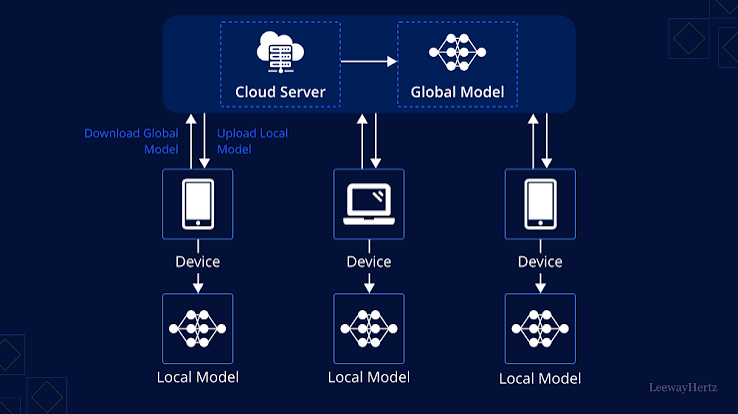
One important trend is the movement toward smaller and more efficient AI models. Improvements in model compression, specialized hardware, and efficient training methods are helping make certain AI capabilities available on smartphones, laptops, cameras, and other edge devices.
This can reduce dependence on cloud services for supported tasks and may improve responsiveness or privacy.
Another trend is the development of multimodal systems that process different forms of information, including text, images, audio, and video. These systems can support more flexible applications in education, accessibility, research, and productivity.
Researchers are also working to improve reliability, interpretability, energy efficiency, and the ability of AI systems to generalize beyond their training examples.
At the same time, concerns about data privacy, intellectual property, bias, security, and environmental costs remain important.
Organizations will increasingly need to evaluate AI systems not only according to performance, but also according to their safety, transparency, and social impact.
Machine learning will continue to provide practical tools for structured prediction and decision support, while deep learning will remain influential in complex perception and generative applications.
The future is unlikely to involve one approach replacing the other. Instead, progress will depend on selecting and combining methods that solve particular problems effectively.
Conclusion
Machine learning and deep learning are closely related technologies that play important roles in modern artificial intelligence. Although both enable computers to learn from data, they differ in their methods, computational demands, typical applications, and levels of interpretability.
Machine learning is a broad field that includes techniques such as regression, decision trees, random forests, and support vector machines. It can be especially effective for structured data, forecasting, classification, and business analytics.
Deep learning is a specialized branch of machine learning that uses multilayer neural networks to learn complex patterns. It has contributed to major advances in image recognition, speech processing, language models, and generative AI.
The key difference is not simply that deep learning is newer or more powerful. It is that different methods are suited to different challenges. Traditional machine learning can be faster, easier to interpret, and less expensive for many tasks, while deep learning can offer significant advantages when working with complex, unstructured data.
Choosing between them requires careful consideration of the problem, available data, computing resources, accuracy requirements, and long-term maintenance costs.
For students and beginners, learning the fundamentals of machine learning provides a useful foundation before exploring neural networks and deep learning architectures. For businesses, testing simpler approaches before investing in complex systems can lead to more efficient and reliable solutions.
Ultimately, both technologies are important parts of the AI landscape. Understanding their differences makes it easier to evaluate modern AI applications, identify realistic opportunities, and make informed decisions about how intelligent systems can be used effectively and responsibly.