Introduction
Every day, businesses, organizations, and individuals generate enormous amounts of data. Online purchases, customer interactions, financial transactions, website visits, weather reports, and even information from connected devices contribute to a growing collection of digital information. However, collecting data is only the first step. The real value comes from understanding what that information means and using it to make better decisions.
This is where predictive analytics powered by artificial intelligence (AI) is making a significant difference.
Predictive analytics uses historical information, statistical techniques, and machine learning algorithms to estimate what may happen in the future. When combined with AI, it can identify complex patterns, process large datasets, and update predictions as new information becomes available. These capabilities help organizations anticipate customer needs, manage risks, improve operations, and discover opportunities that might otherwise remain hidden.
For example, a retailer can use predictive analytics to estimate which products customers are likely to purchase. A hospital may use carefully validated models to forecast patient demand, while a manufacturer can analyze equipment data to identify potential failures before they cause costly disruptions.
What makes this technology particularly valuable is its ability to turn raw information into practical insights. Instead of relying entirely on past experience or intuition, decision-makers can use data-driven forecasts to compare options and prepare for different possibilities.
However, predictive analytics is not a crystal ball. AI systems can make mistakes, inherit biases from historical data, and struggle when circumstances change unexpectedly. Their predictions must be evaluated carefully before they are used to guide important decisions.
In this article, we will explore how AI-powered predictive analytics works, where it is being used, what benefits it offers, and the challenges organizations must address to use it responsibly.
1. What Is Predictive Analytics?
Predictive analytics is the process of examining historical and current data to estimate future outcomes. It uses statistical models, machine learning algorithms, and other analytical techniques to identify relationships that may help explain what is likely to happen next.
Traditional reporting usually focuses on understanding past events. It might show how much a company sold last month, which products performed best, or how many customers visited a website.
Predictive analytics takes the next step by using that information to estimate future results.
For example, a business report might reveal that sales increased during the holiday season last year. A predictive model could combine that historical pattern with current demand, advertising activity, inventory levels, and other relevant factors to estimate sales for the upcoming holiday period.
AI can strengthen this process by helping models identify complicated relationships across large amounts of information.
Predictive analytics can answer questions such as:
- Which products are likely to experience higher demand?
- Which customers may stop using a service?
- Which machines are at greater risk of failure?
- How much inventory might a business need next month?
- Which transactions appear unusual or potentially fraudulent?
- How might changes in pricing affect future sales?
The purpose is not to eliminate uncertainty but to reduce it where possible.
A reliable prediction gives decision-makers additional information to consider before taking action. It can help them prepare for risks, allocate resources, and identify opportunities earlier than they might through manual analysis alone.
2. How AI-Powered Predictive Analytics Works
AI-powered predictive analytics combines data collection, preparation, model training, prediction, and evaluation. Although the technical details vary between applications, most projects follow a similar process.
Step 1: Collecting relevant data
The process begins with gathering information related to the problem being investigated.
A retailer might collect sales records, product prices, seasonal trends, promotional activity, and inventory levels. A manufacturer might use temperature readings, vibration measurements, maintenance records, and production schedules.
Data may come from databases, business applications, online platforms, sensors, or external sources such as weather information.
The usefulness of a predictive model depends partly on whether the collected data reflects the factors that influence the outcome.
Step 2: Preparing the data
Raw data is rarely ready for immediate use. It may contain missing values, duplicate records, inconsistent formats, incorrect measurements, or outdated information.
Data preparation involves identifying and addressing these problems, combining relevant sources, and transforming information into a suitable format.
This stage is essential because a sophisticated AI model cannot reliably compensate for every problem in the underlying data.
Step 3: Training the model
A machine learning algorithm examines historical examples to identify patterns associated with the outcome being predicted.
For example, a model forecasting product demand may learn relationships between previous sales, prices, promotions, holidays, and stock availability.
During training, the model adjusts its parameters to improve its predictions according to a selected objective.
Step 4: Generating predictions
Once trained and evaluated, the model can process new information to produce estimates.
These estimates may include a predicted sales figure, the probability of customer cancellation, or an assessment of equipment failure risk.
Good predictive systems often communicate uncertainty rather than presenting every estimate as a guaranteed outcome.
Step 5: Evaluating and improving performance
Predictions should be compared with actual results using appropriate evaluation methods.
If a forecasting model consistently underestimates demand, analysts may investigate whether the data, model design, or changing market conditions explain the problem.
Models may then be adjusted or retrained, subject to testing and suitable approval procedures.
This process helps organizations determine whether the system is genuinely useful rather than simply producing impressive-looking predictions.
3. The Role of Machine Learning and Deep Learning
Machine learning is one of the main technologies behind modern predictive analytics. It allows computers to learn patterns from examples and apply those patterns to new situations.
Different algorithms are suited to different tasks.
Regression models are commonly used to predict numerical values, such as sales revenue, energy consumption, or delivery times.
Classification models estimate which category an observation belongs to. They can help identify potentially fraudulent transactions, classify customer requests, or estimate whether a customer is likely to cancel a subscription.
Decision trees and ensemble methods can identify complex relationships in structured business data. These methods are often useful when working with spreadsheets, customer records, and transaction histories.
Deep learning, a specialized branch of machine learning, uses multilayer neural networks to learn complex representations of information. It can be particularly useful when predictions depend on images, audio, text, sensor streams, or other complicated inputs.
For instance, a predictive maintenance system might combine traditional machine learning with deep learning models that analyze patterns in equipment sensor readings.
AI can also help analyze unstructured information, such as customer feedback or support conversations, and combine the resulting signals with structured business data.
However, more advanced algorithms are not always better. A relatively simple model may produce accurate predictions at a lower cost and with greater interpretability.
The right choice depends on the problem, available data, accuracy requirements, computing resources, and consequences of incorrect predictions.
4. Predictive Analytics in Business Decision-Making
Businesses frequently make decisions under uncertainty. They must estimate future demand, manage budgets, allocate employees, determine prices, and respond to changing customer expectations.
AI-powered predictive analytics can support these decisions by providing forecasts based on historical evidence and current information.
Consider a retailer preparing for a busy shopping season. Ordering too much inventory can increase storage costs and lead to unsold products. Ordering too little can result in missed sales and disappointed customers.
A predictive model can estimate demand for individual products by examining previous sales, seasonal patterns, promotions, and other relevant variables.
Managers can use those estimates to make more informed purchasing decisions.
Predictive analytics can also support financial planning. Businesses may forecast revenue, estimate cash flow, identify potential cost increases, and compare different budget scenarios.
Marketing teams can use predictions to identify customer groups that may respond positively to a campaign. Customer service teams may estimate which requests are likely to require additional attention.
In each case, the technology provides evidence to support a decision rather than automatically guaranteeing the correct choice.
Human judgment remains important because business conditions can change suddenly. New competitors, unexpected events, supply shortages, and changes in customer behavior may make historical patterns less reliable.
The strongest results often come from combining analytical forecasts with practical experience and a clear understanding of the business environment.
5. Transforming Customer Experiences Through Prediction
Understanding customer behavior is one of the most widely discussed applications of predictive analytics.
Businesses want to understand what customers may need, which products they may prefer, and what factors influence their decisions.
AI models can examine purchasing histories, browsing patterns, product interactions, and other appropriately collected information to identify useful trends.
Personalized recommendations
Online shopping platforms and streaming services use recommendation systems to suggest products, films, music, and other content.
These systems may estimate which items are most relevant to a particular user based on previous interactions and patterns among similar users or products.
When recommendations are relevant, they can make it easier for customers to discover useful options.
Customer churn prediction
Subscription businesses often want to identify customers who may stop using their services.
Predictive models can examine patterns such as declining usage, repeated complaints, or changes in purchasing behavior to estimate cancellation risk.
A company can then investigate the reasons behind that risk and consider appropriate actions, such as improving customer support or offering a more suitable service plan.
Demand and preference forecasting
Retailers can use predictive analytics to estimate which products may become popular and which customer groups may respond to new offerings.
These forecasts can support product planning, inventory management, and marketing decisions.
Nevertheless, personalization must be handled responsibly. Customers may not expect every aspect of their behavior to be tracked or analyzed.
Organizations should explain their data practices clearly, respect privacy choices, and avoid using sensitive information in inappropriate ways.
Personalization is most valuable when it improves the customer experience without making people feel that their privacy has been compromised.
6. Predictive Analytics in Healthcare
Healthcare is another important area where predictive analytics can support planning and decision-making.
Hospitals and healthcare organizations manage changing patient demand, limited resources, staffing requirements, and complex operational challenges. Predictive models can help estimate how many patients may require services and which resources may be needed.
For example, a hospital may use historical admission records, seasonal patterns, and other relevant information to forecast demand for particular departments.
These estimates can help administrators plan staffing levels, allocate beds, and prepare equipment.
Predictive analytics is also being investigated and used in clinical settings to support risk assessment and medical research.
Depending on the application, models may analyze medical images, patient records, laboratory results, or physiological measurements to identify patterns associated with particular outcomes.
However, healthcare predictions require especially careful evaluation. A model trained on one patient population may not perform equally well in another. Incomplete data or historical inequalities can also affect results.
A prediction should not automatically be treated as a diagnosis or a substitute for professional medical judgment.
Healthcare organizations need to evaluate model performance, protect sensitive information, and establish clear procedures for human review.
When appropriately designed and validated, predictive analytics can help healthcare professionals plan services and investigate risks while keeping patient safety at the center of decision-making.
7. Predictive Maintenance: Preventing Problems Before They Happen
Unexpected equipment failures can disrupt production, delay deliveries, and create expensive repair bills.
Predictive maintenance uses data from machinery and other equipment to estimate when a problem may occur or when maintenance may be needed.
AI can help analyze information such as temperature, vibration, pressure, operating speed, and previous repair records.
For example, a manufacturing machine may gradually develop an unusual vibration pattern. A predictive model can identify that pattern as potentially associated with equipment wear and alert maintenance staff for further inspection.
This gives the organization an opportunity to investigate the problem before a major failure occurs.
Predictive maintenance can be useful in factories, energy facilities, transportation systems, data centers, and other environments where equipment reliability matters.
It can offer several advantages:
- Reduced unexpected downtime.
- Better planning of maintenance schedules.
- More efficient use of replacement parts.
- Improved visibility into equipment performance.
- Potential reductions in repair and operational costs.
However, predictive maintenance is not always more effective than traditional scheduled maintenance. Some equipment may produce limited data, and certain failures may occur without clear warning signs.
Organizations must also consider the cost of sensors, data infrastructure, model development, and monitoring.
The most effective approach depends on the equipment, the consequences of failure, and whether the available data can support reliable predictions.
8. Improving Financial Planning and Fraud Detection
Financial decisions often involve uncertainty, making predictive analytics particularly valuable for banks, insurers, payment providers, and other financial organizations.
Machine learning models can analyze transaction patterns, historical performance, and other relevant information to help identify risks.
Fraud detection
Fraud detection systems can examine transaction amounts, timing, locations, account activity, and other signals to identify unusual behavior.
A model may flag a transaction that differs significantly from the account’s normal pattern, allowing a financial institution to investigate it or request additional verification.
However, unusual activity is not necessarily fraudulent. Effective systems must balance the detection of suspicious transactions against the inconvenience of incorrectly blocking legitimate customers.
Credit risk assessment
Financial institutions may use predictive models to estimate the likelihood that a borrower will fail to meet particular repayment obligations.
Such assessments must follow applicable legal requirements and be evaluated for accuracy and fairness.
Financial forecasting
Businesses can use predictive analytics to estimate cash flow, revenue, expenses, and future financial requirements.
These forecasts can help decision-makers prepare for periods of uncertainty and compare possible strategies.
Financial predictions should never be treated as guarantees. Market conditions, unexpected events, and changes in individual circumstances can undermine even carefully designed models.
Organizations should communicate uncertainty, maintain appropriate oversight, and avoid allowing automated predictions to become unquestioned decisions.
9. Supply Chains and Logistics Become More Predictable
Modern supply chains involve suppliers, warehouses, transport networks, retailers, and customers. Disruptions in one area can affect the entire process.
AI-powered predictive analytics can help organizations anticipate changes in demand, delivery schedules, inventory requirements, and transportation conditions.
For example, a logistics company may combine historical delivery times with current traffic information and weather forecasts to estimate when a shipment is likely to arrive.
A retailer may forecast demand for products across several locations and use those estimates to distribute inventory more effectively.
Manufacturers can use predictive models to anticipate material requirements and identify possible supply shortages.
These capabilities can improve coordination and reduce the risk of ordering too much or too little inventory.
Predictive analytics can also support scenario planning. A company might compare what could happen if a supplier experiences a delay or transportation costs increase.
However, supply chains are influenced by factors that are difficult to predict, including geopolitical events, natural disasters, sudden regulatory changes, and unexpected factory closures.
Models should therefore be updated when reliable new information becomes available, and businesses should avoid relying on a single forecast without considering alternative scenarios.
Predictive analytics works best as part of a broader risk-management strategy that includes contingency plans, supplier diversification, and human decision-making.
10. Predictive Analytics in Marketing and Sales
Marketing teams need to decide where to spend budgets, which audiences to reach, and how to evaluate campaign performance.
Predictive analytics can help estimate which customers are likely to respond to a campaign, which products may attract interest, and which channels may produce better results.
For example, a business may analyze previous campaign outcomes, customer interactions, purchase histories, and product characteristics to estimate the likely performance of a new promotion.
These estimates can help teams compare campaign options before committing substantial resources.
Predictive lead scoring is another application. A model may estimate which potential customers are more likely to become paying customers based on historical patterns.
Sales teams can use these predictions to prioritize follow-ups, although they should avoid overlooking promising customers simply because a model assigns them a lower score.
Predictive analytics can also support pricing decisions by estimating how demand may respond to changes in price. However, price sensitivity varies across customer groups and market conditions, so these models require careful testing.
It is important to distinguish prediction from causation. A model may identify customers who are likely to buy, but that does not necessarily mean a particular advertisement caused their purchase.
Businesses should use controlled experiments where appropriate to determine whether a marketing intervention actually produces additional sales.
Combining predictive models with careful measurement can help organizations make more informed marketing decisions without confusing correlation with cause and effect.
11. The Benefits of AI-Powered Predictive Analytics
When implemented effectively, predictive analytics can offer several important advantages.
Better-informed decisions
Forecasts provide an additional source of evidence for managers, analysts, and other decision-makers.
Instead of relying entirely on intuition, they can examine patterns, compare alternatives, and consider likely outcomes.
Greater operational efficiency
Predictions can help organizations plan inventory, allocate employees, schedule maintenance, and coordinate resources more effectively.
This can reduce waste and improve the use of available capacity.
Earlier risk identification
AI systems may identify warning signs before a problem becomes obvious through conventional reporting.
Examples include unusual financial activity, declining customer engagement, and changes in equipment performance.
More personalized services
Organizations can use predictions to tailor recommendations, communication, and support to individual needs, provided they respect privacy and fairness requirements.
Improved planning
Predictive models can help businesses examine different scenarios and prepare for possible changes in demand, costs, or operating conditions.
Faster analysis
AI can process large datasets more quickly than many manual approaches, helping analysts discover patterns and generate forecasts at scale.
These benefits are not automatic. They depend on data quality, model reliability, appropriate implementation, and whether the predictions actually improve decisions.
A prediction that cannot be acted upon, or that costs more to produce than the value it provides, may offer little practical benefit.
12. The Challenges and Limitations of Predictive Analytics
Despite its advantages, AI-powered predictive analytics has limitations that organizations must understand.
Inaccurate or incomplete data
Models learn from the information they receive. Missing records, incorrect measurements, and inconsistent data can undermine their predictions.
Organizations should establish processes for checking data quality before relying on model outputs.
Changing conditions
A model trained on historical information may become less accurate when customer behavior, market conditions, or operating environments change.
This problem is sometimes described as data drift or concept drift, depending on what changes.
Monitoring helps organizations identify when a model may need investigation, adjustment, or retraining.
Bias and unfair outcomes
Historical data may reflect past inequalities or unbalanced representation. Models trained on such information can reproduce or amplify those problems.
This is especially concerning in areas such as employment, lending, insurance, and healthcare.
Organizations should test outcomes across relevant groups and investigate significant differences in performance.
Lack of transparency
Some complex AI models are difficult to explain. Decision-makers may struggle to understand why a particular prediction was generated.
In sensitive applications, interpretability and clear documentation can be important parts of responsible deployment.
Privacy and security
Predictive analytics often depends on personal or commercially sensitive information. Organizations must protect that information and ensure that its collection and use are appropriate.
False confidence
A prediction can appear precise without being accurate. For example, an estimate of next month’s sales may be presented as a single number even though several different outcomes remain possible.
Using confidence intervals, prediction ranges, scenario analysis, or other uncertainty measures can provide a more realistic picture.
Recognizing these limitations does not make predictive analytics less useful. It helps organizations use it with greater care and make better decisions about when predictions should influence action.
13. Predictive Analytics vs. Prescriptive Analytics
Predictive analytics and prescriptive analytics are closely related, but they answer different questions.
Predictive analytics focuses on what is likely to happen. Prescriptive analytics focuses on what action may be most appropriate given a set of objectives, constraints, and possible outcomes.
Consider a retailer preparing for an upcoming sales period.
A predictive model might estimate that demand for a particular product will increase by 20 percent.
A prescriptive system could use that forecast, together with storage capacity, purchasing costs, supplier constraints, and budget limits, to recommend an inventory order.
The distinction is important because knowing what may happen does not automatically reveal the best response.
Organizations may also use descriptive analytics to understand what has already happened and diagnostic analytics to investigate why it happened.
Together, these approaches can support a broader decision-making process:
- Descriptive analytics: What happened?
- Diagnostic analytics: Why did it happen?
- Predictive analytics: What is likely to happen next?
- Prescriptive analytics: What should we consider doing about it?
AI can contribute to several stages of this process, but human judgment remains important when objectives conflict or decisions involve ethical, financial, or social consequences.
A strong analytics strategy connects forecasts to practical actions while making uncertainty and trade-offs visible.
14. How to Implement Predictive Analytics Successfully
Organizations do not need to begin with a massive AI project to benefit from predictive analytics. In many cases, a focused pilot is a more effective starting point.
The first step is to define a specific business problem. For example, a company might want to reduce unexpected equipment downtime, improve demand forecasts, or identify customers at risk of cancellation.
Next, determine whether relevant data is available and whether it is sufficiently reliable. Assess where the data comes from, how frequently it is updated, and whether its use raises privacy or legal concerns.
The organization should then select an appropriate analytical method and establish a baseline for comparison.
For instance, a sales forecasting model could be compared with the company’s existing forecasting process. The evaluation should measure whether the new model improves accuracy enough to justify its cost.
Testing should reflect real-world conditions. For forecasting tasks, this often means training on earlier periods and evaluating predictions on later periods that the model has not seen.
After deployment, monitor both technical performance and business outcomes. A model that produces accurate predictions may still fail to deliver value if employees cannot act on its recommendations.
Organizations should also define responsibility for reviewing errors, investigating unexpected results, updating models, and approving important changes.
Employee training is valuable because users need to understand what predictions mean, how uncertainty should be interpreted, and when human judgment should take priority.
Finally, successful projects should be evaluated against measurable objectives, such as reduced downtime, improved forecast accuracy, lower waste, or better customer retention.
The goal is not simply to introduce AI. It is to use reliable predictions to produce meaningful improvements.
15. The Future of AI-Powered Predictive Analytics
Predictive analytics is likely to become more accessible as AI tools, computing infrastructure, and data-management platforms continue to develop.
One important direction is the integration of different data types. Models may increasingly combine text, images, numerical records, and sensor readings to produce richer forecasts.
For example, a manufacturer could analyze machine measurements alongside maintenance reports and technician notes to develop a more complete understanding of equipment performance.
Another development is the use of AI assistants to help analysts explore datasets, create forecasts, explain model outputs, and compare scenarios. These tools may make analytical work easier for people who do not have extensive programming experience.
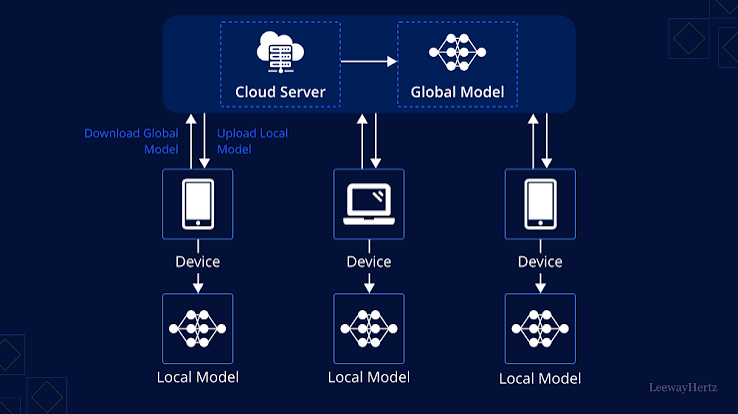
Edge computing may also support predictions closer to where data is generated. Industrial sensors, connected vehicles, and other devices could use local models to identify important patterns without sending every observation to a remote server.
Organizations are also paying greater attention to model monitoring, explainability, privacy, and responsible AI governance.
As predictive systems become more closely integrated into business workflows, it will be increasingly important to understand not only what a model predicts but also how reliable that prediction is and what consequences may follow from acting on it.
The future of predictive analytics will depend on improvements in both technical capability and responsible implementation.
More powerful algorithms can help, but better data, careful evaluation, and sound decision-making will remain essential.
Conclusion
AI-powered predictive analytics is changing how organizations understand data and prepare for the future. By combining historical information, machine learning, and statistical analysis, it helps businesses estimate demand, identify risks, personalize customer experiences, improve maintenance planning, and make more informed operational decisions.
Its value lies in turning large amounts of information into forecasts that people can use. Instead of responding only after a problem occurs, organizations can investigate warning signs, compare possible outcomes, and prepare for uncertainty.
However, predictive analytics is not infallible. Poor data, changing conditions, biased historical records, privacy concerns, and overconfidence in model outputs can undermine its effectiveness.
Successful implementation requires a clear objective, reliable data, suitable models, meaningful evaluation, and ongoing monitoring. It also requires people who understand how to interpret predictions and recognize when additional evidence or human judgment is necessary.
As AI technology advances, predictive analytics will likely become more integrated into everyday business tools, healthcare planning, connected devices, and financial decision-making.
Organizations that approach it thoughtfully can gain valuable insights without assuming that algorithms can eliminate uncertainty completely.
Ultimately, the purpose of predictive analytics is not to predict every future event perfectly. It is to make uncertainty easier to understand, decisions more informed, and responses more effective. When data, AI, and human judgment work together, predictions can become a powerful foundation for smarter decisions.