In today’s fast-moving digital world, businesses have access to more data than ever before. Every online purchase, customer interaction, website visit, social media activity, and business transaction creates valuable information. But collecting data is only the first step. The real challenge is understanding what that data means and how it can help a business make better decisions.
This is where Predictive Analytics comes into play.
Predictive Analytics uses historical data, statistical techniques, machine learning, and other analytical methods to identify patterns and estimate what may happen in the future. Instead of simply looking at what happened yesterday, businesses can use predictive models to prepare for what could happen tomorrow.
From predicting customer behavior to managing inventory and identifying potential risks, Predictive Analytics has become an important tool across many industries.
What Is Predictive Analytics?
Predictive Analytics is a data analysis approach that uses existing information to make informed predictions about future events or outcomes. It does not tell us exactly what will happen. Instead, it calculates the likelihood of different outcomes based on patterns found in previous data.
For example, an online store may analyze a customer’s previous purchases, browsing history, and product preferences. Using this information, the company can predict which products that customer may be interested in buying next.
Similarly, a bank might use Predictive Analytics to identify transactions that appear unusual or potentially fraudulent. A hospital could analyze patient information to estimate the risk of certain health complications.
The goal is simple: use available data to make smarter decisions before an event happens.
How Does Predictive Analytics Work?
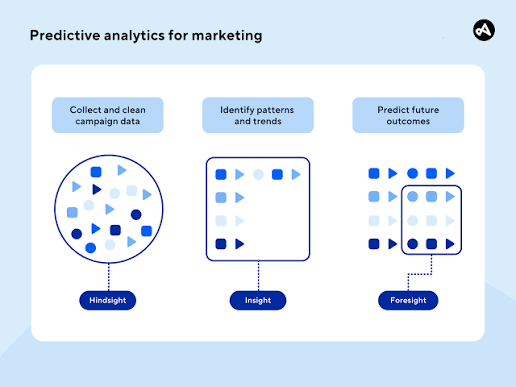
Predictive Analytics generally begins with collecting relevant historical data. This information can come from many sources, including customer databases, sales records, websites, mobile applications, financial systems, sensors, and social media platforms.
Once the data is collected, it needs to be cleaned and organized. Poor-quality or incomplete data can lead to unreliable predictions, so businesses usually spend considerable time preparing their datasets.
The next step involves identifying useful patterns and relationships within the data. Analysts and data scientists may use statistical models or machine learning algorithms to build predictive models.
After a model has been developed, it can be tested using historical or new data. If the results are reliable, the model can then be used to support real-world decisions.
The process is not necessarily a one-time activity. As new data becomes available, predictive models can be updated and improved.
Why Is Predictive Analytics Important?
One of the biggest advantages of Predictive Analytics is that it allows businesses to move from reactive decision-making toward proactive planning.
Without predictive tools, a company may discover a problem only after it has already occurred. With predictive analysis, the organization may recognize warning signs earlier and take action.
For instance, a retailer that expects increased demand for a particular product can increase its inventory before customers begin purchasing it. A subscription-based company can identify customers who are likely to cancel their memberships and take steps to improve their experience.
Predictive Analytics can also help companies reduce uncertainty. Business decisions will never be completely risk-free, but having data-based insights can make those decisions more informed.
Common Applications of Predictive Analytics
Predictive Analytics is used in a wide range of industries because almost every organization generates data.
Marketing and Customer Behavior
Marketing teams use predictive models to understand customers and anticipate their future behavior. Companies can analyze purchasing patterns, demographic information, browsing activity, and engagement history to identify potential customers and determine which products or services may appeal to them.
Predictive Analytics can also help businesses understand customer churn. If certain behaviors are commonly associated with customers leaving a service, a company can identify similar customers and offer them better support, discounts, or personalized experiences.
Retail and E-Commerce
Retailers need to maintain the right balance between supply and demand. Too much inventory can increase storage costs, while too little inventory can result in missed sales.
Predictive models can examine previous sales, seasonal trends, promotions, and other factors to estimate future demand. This helps retailers make better inventory and pricing decisions.
Online stores can also use predictive recommendations to suggest products based on a customer’s previous interactions.
Finance and Banking
The financial sector is one of the major users of Predictive Analytics. Banks and financial institutions can use historical information to evaluate credit risk, detect suspicious transactions, and forecast financial trends.
For example, predictive models may help determine whether a loan applicant is likely to repay a loan based on relevant financial factors. They can also identify unusual transaction patterns that may require further investigation.
Healthcare
Healthcare organizations generate large amounts of data, including patient records, test results, treatment histories, and operational information.
Predictive Analytics can help healthcare professionals identify patients who may be at higher risk of certain complications. Hospitals can also use predictive models for staffing, resource planning, and patient flow management.
However, healthcare predictions require careful handling because inaccurate predictions can have serious consequences. Human expertise and appropriate safeguards remain essential.
Manufacturing
Manufacturers can use Predictive Analytics to improve production processes and equipment maintenance.
One useful application is predictive maintenance. Instead of waiting for a machine to fail, companies can analyze sensor readings and historical maintenance data to identify signs that equipment may require attention.
This can reduce unexpected downtime, lower maintenance costs, and improve operational efficiency.
Predictive Analytics vs. Other Types of Analytics
Predictive Analytics is one part of a broader analytics process.
Descriptive analytics focuses on understanding what has already happened. For example, a company might examine its sales from the previous year.
Diagnostic analytics goes a step further by asking why something happened. A business might investigate why sales decreased during a particular period.
Predictive Analytics focuses on what is likely to happen next. It might estimate future sales based on historical trends and current conditions.
There is also prescriptive analytics, which focuses on what an organization should do in response to potential outcomes.
These approaches can work together. A business may first understand what happened, determine why it happened, predict what could happen next, and then identify possible actions.
Benefits of Predictive Analytics
When implemented properly, Predictive Analytics can provide several important benefits.
First, it can improve decision-making. Managers can use evidence and probability-based insights rather than relying entirely on assumptions.
Second, predictive models can help organizations identify risks earlier. Early warnings give businesses more time to respond.
Third, Predictive Analytics can improve efficiency. Companies can forecast demand, optimize resources, and automate certain decisions.
Another major benefit is personalization. Businesses can use customer data to create more relevant experiences, recommendations, and marketing campaigns.
Predictive Analytics may also create a competitive advantage. Organizations that understand their data and respond quickly to changing conditions can often adapt more effectively than businesses that rely only on traditional methods.
Challenges of Predictive Analytics
Despite its benefits, Predictive Analytics is not a magic solution. Its accuracy depends heavily on the quality and relevance of the data being used.
If historical data contains errors, missing information, or significant bias, a predictive model may produce misleading results. A model can also become less accurate when market conditions change dramatically.
Privacy is another important concern. Businesses must handle personal and sensitive information responsibly and follow applicable data protection requirements.
There is also the challenge of explaining predictions. Some advanced machine learning models can be difficult to interpret. If employees or customers do not understand why a prediction was made, they may hesitate to trust the system.
For these reasons, organizations should combine predictive technology with human judgment, proper governance, and regular model evaluation.
The Role of Artificial Intelligence
Artificial Intelligence and machine learning have expanded the capabilities of Predictive Analytics. Modern systems can process large datasets and recognize complex patterns that may be difficult to identify manually.
Machine learning models can also improve as they receive new data. Instead of depending entirely on fixed rules, these systems can learn relationships within datasets and generate increasingly sophisticated predictions.
However, more advanced technology does not automatically guarantee better results. The quality of the data, the design of the model, the business problem being addressed, and the way results are interpreted all matter.
Technology should therefore support human decision-making rather than blindly replace it.
The Future of Predictive Analytics
The future of Predictive Analytics is closely connected with the growth of artificial intelligence, cloud computing, automation, and real-time data.
As businesses collect more information from connected devices, applications, websites, and digital services, predictive systems will have access to increasingly diverse datasets.
Real-time Predictive Analytics may become particularly valuable. Instead of waiting for monthly or weekly reports, organizations can respond to changing conditions almost immediately.
For example, a company could monitor customer demand in real time and adjust inventory or marketing strategies accordingly. Manufacturers could receive immediate warnings when equipment begins showing unusual behavior.
At the same time, responsible use will become increasingly important. Businesses will need to pay attention to privacy, transparency, fairness, security, and the potential impact of automated decisions.
Frequently Asked Questions About Predictive Analytics
1. What is Predictive Analytics?
Predictive Analytics is a data analysis method that uses historical data, statistical techniques, and machine learning to predict possible future outcomes. Businesses use it to make better decisions, identify risks, understand customer behavior, and plan for future demand.
2. How does Predictive Analytics help businesses?
Predictive Analytics helps businesses make more informed decisions by identifying patterns in existing data. It can help companies forecast sales, reduce risks, improve customer retention, manage inventory, detect fraud, and increase operational efficiency.
3. What industries use Predictive Analytics?
Predictive Analytics is used across many industries, including finance, healthcare, retail, manufacturing, marketing, insurance, transportation, and e-commerce. Each industry uses it differently depending on its goals and the type of data available.
4. Is Predictive Analytics the same as Artificial Intelligence?
No. Predictive Analytics and Artificial Intelligence are related but not exactly the same. Predictive Analytics focuses on using data to estimate future outcomes, while Artificial Intelligence is a broader field that enables machines to perform tasks that typically require human-like intelligence. Machine learning, a branch of AI, is often used in Predictive Analytics.
5. What are the main benefits of Predictive Analytics?
The main benefits of Predictive Analytics include better decision-making, early risk detection, improved efficiency, more accurate forecasting, personalized customer experiences, and reduced operational costs. When based on reliable data, it can help organizations prepare for future opportunities and challenges.
Conclusion
Predictive Analytics has changed the way organizations think about data. Rather than using information only to understand the past, businesses can analyze historical patterns to make more informed decisions about the future.
Its applications range from marketing and retail to banking, healthcare, and manufacturing. When supported by high-quality data and appropriate technology, Predictive Analytics can help companies reduce risks, improve efficiency, understand customers, and respond to changing market conditions.
Still, predictions are never guaranteed. They are estimates based on available information, and unexpected events can always change the outcome. The most effective approach is to combine predictive insights with human experience, critical thinking, and responsible data practices.
As technology continues to evolve, Predictive Analytics will likely become an even more important part of modern business strategy. Organizations that learn how to turn their data into useful forward-looking insights will be better positioned to make smarter decisions and prepare for an increasingly unpredictable future.