Natural language is one of the most important ways humans communicate with one another. It includes the languages people use every day, such as English, Urdu, Spanish, Arabic, Chinese, and thousands of others. Unlike programming languages, natural language develops naturally through human interaction, culture, history, and social experiences.
In recent years, the term Natural Language has become increasingly important because technology has started to understand and process human communication. Search engines, virtual assistants, chatbots, translation tools, and artificial intelligence systems all rely on technologies that allow computers to work with the way people naturally speak and write.
But what exactly is natural language, how does it work, and why is it so important in modern technology? Let’s explore these questions in simple terms.
What Is Natural Language?
Natural language refers to the communication systems that humans naturally develop and use. When people have a conversation, write an email, ask a question, tell a story, or explain an idea, they are using natural language.
Natural language is different from a computer programming language. Programming languages follow strict rules and structures. A computer usually needs specific syntax to understand a programming command. Human communication, however, is much more flexible.
For example, a person might say:
“Could you please tell me what the weather will be like tomorrow?”
Another person could ask the same thing by saying:
“What’s the weather tomorrow?”
Both sentences communicate almost the same meaning, even though the wording is different. Humans can easily understand the intention behind both questions. Teaching computers to handle this kind of flexibility is one of the major goals of language technology.
Why Is Natural Language Important?
Natural language is important because it makes communication easier between humans and technology. In the past, using a computer often required users to understand technical commands or complicated interfaces. Today, people can communicate with many digital systems using ordinary language.
For example, users can ask a voice assistant to set an alarm, search for information, play music, or send a message. Similarly, people can interact with AI tools by simply typing what they need.
This development has made technology more accessible. A person does not necessarily need programming knowledge to communicate with an advanced computer system. Instead, they can describe their goal in their own words.
Natural language also plays an important role in education, customer service, healthcare technology, online search, content creation, and business communication.
How Do Computers Understand Natural Language?
Computers do not understand language in exactly the same way humans do. They process text or speech using specialized technologies that identify patterns, words, relationships, and possible meanings.
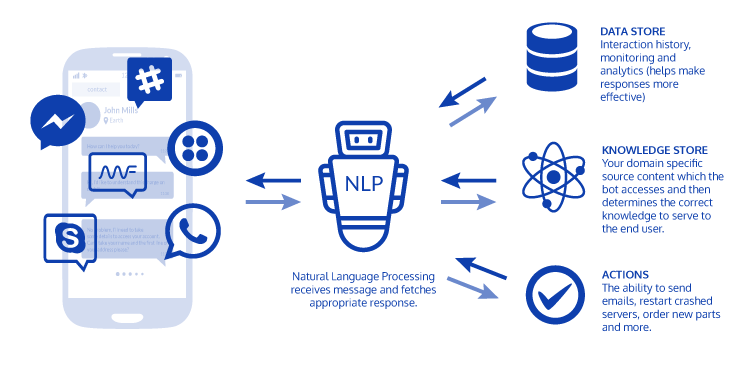
A major field connected with this process is Natural Language Processing (NLP). NLP combines computer science, artificial intelligence, and linguistics to help machines analyze and work with human language.
When a computer receives a sentence, it can break the sentence into smaller pieces and analyze different elements. Depending on the system, it may identify individual words, sentence structure, context, sentiment, intent, and relationships between different terms.
For example, if someone writes, “I am looking for a hotel near the airport,” an NLP system may recognize that the person wants accommodation and that proximity to an airport is an important requirement.
Modern AI systems can perform much more advanced language analysis. They can summarize information, answer questions, translate languages, generate text, identify sentiment, and maintain conversations.
Natural Language and Artificial Intelligence
The connection between natural language and artificial intelligence has become particularly strong. Modern AI systems are designed to interact with people through text and speech, making natural language one of the most important interfaces for AI.
Instead of selecting multiple buttons or navigating complicated menus, a user can simply describe what they want.
For example, a business owner might ask an AI system to create a professional product description. A student might ask for an explanation of a difficult topic. A customer might describe a problem to a chatbot and receive assistance.
This type of interaction is possible because AI systems can analyze language and generate responses based on patterns learned from large amounts of information.
However, understanding language is not always simple. Human communication often contains sarcasm, humor, cultural references, incomplete sentences, and words with multiple meanings. AI systems must consider context to produce a useful response.
Natural Language in Search Engines
Search engines are another area where natural language has made a significant difference. People rarely search using perfectly structured sentences. Instead, they often type questions or short phrases based on what they want to know.
For example, someone might search for:
“best way to clean white shoes”
The search engine needs to understand the user’s intention rather than simply matching every individual word. Modern search technologies attempt to understand the meaning and context behind a query so that they can provide more relevant results.
Natural language also allows people to ask complete questions. Instead of searching for individual keywords, a user can type something like, “How can I remove coffee stains from a white shirt?” This makes online search more conversational and convenient.
Natural Language in Customer Service
Customer service has also benefited from language technology. Many companies use chatbots and automated support systems to answer common questions.
A traditional automated system might require customers to select options from a menu. A natural-language-based chatbot can allow users to explain their problem in their own words.
For example, a customer might write, “My package hasn’t arrived yet. Can you check the delivery status?”
The system can identify the user’s intent and potentially provide information about the shipment.
This can save time for both customers and businesses. Human customer-service representatives can focus on more complicated cases while automated systems handle routine questions.
Natural Language in Translation
Language barriers can make communication difficult, especially when people from different countries need to work or communicate together. Natural language technology has helped improve automatic translation systems.
Modern translation tools can convert text from one language into another within seconds. Although machine translation is not always perfect, it has become increasingly useful for everyday communication.
Translation technology can help travelers understand signs, businesses communicate with international customers, and people access information written in other languages.
Context remains an important challenge. The same word can have different meanings depending on how it is used. Cultural expressions and idioms can also be difficult for automated systems to translate accurately.
Natural Language in Education
Natural language technology can be useful in education because students can interact with digital tools using ordinary language.
A student struggling with mathematics, science, history, or another subject can ask for an explanation in simple words. AI-based educational tools can provide examples, explanations, summaries, and practice questions.
Natural language can also make educational technology more accessible to people who may have difficulty navigating traditional software interfaces.
Teachers can use language-based tools to brainstorm lesson ideas, create educational materials, or organize information. However, students should use these technologies responsibly and focus on learning rather than simply copying generated answers.
Challenges of Natural Language
Although language technology has advanced considerably, natural language remains difficult for computers to understand perfectly.
One major challenge is ambiguity. A single word or sentence can have multiple meanings. Humans often determine the correct meaning from context, tone, facial expressions, or previous conversation.
Another challenge is cultural variation. People from different regions may use different expressions, vocabulary, spelling, and communication styles.
Sarcasm and humor can also be difficult. When someone says, “Great job!” they might genuinely be praising someone, or they might be sarcastically criticizing a mistake. The meaning depends heavily on context and tone.
Privacy is another important consideration. Language-based systems may process sensitive conversations, documents, or personal information. Organizations therefore need to handle language data carefully and responsibly.
The Future of Natural Language
The future of natural language technology is likely to involve even more natural interactions between humans and machines. People may increasingly communicate with computers through conversations rather than traditional interfaces.
Voice-based technology may become more accurate and capable of understanding different accents, languages, and speaking styles. AI assistants may also become better at remembering conversation context and understanding complex requests.
Businesses could use natural-language systems to analyze customer feedback, organize documents, and communicate with users. Healthcare, education, finance, and other industries may also continue adopting language-based technologies.
At the same time, human oversight will remain important. Computers can process enormous amounts of language, but they do not experience the world exactly as humans do. Responsible development, privacy protection, accuracy, and transparency will therefore remain important as these systems become more advanced.
Frequently Asked Questions
1. What is natural language?
Natural language is the language humans naturally use to communicate with each other. English, Urdu, Spanish, Arabic, and Chinese are examples of natural languages. They develop through human communication rather than being specifically created for computers.
2. What is Natural Language Processing?
Natural Language Processing, commonly called NLP, is a field of technology that helps computers process, analyze, and generate human language. It is used in applications such as chatbots, translation tools, search engines, and voice assistants.
3. How is natural language different from programming language?
Natural language is designed by human communication and can be flexible, ambiguous, and context-dependent. Programming languages use strict rules and syntax that computers can process more precisely.
4. Why is natural language important for AI?
Natural language gives people an easy way to communicate with AI systems. Instead of learning complicated commands, users can describe their questions or requests using ordinary language.
5. Can computers understand natural language perfectly?
No. Modern systems can understand many types of language remarkably well, but they can still struggle with sarcasm, ambiguous statements, cultural expressions, context, and unusual wording.
6. Where is natural language used?
Natural language technology is used in search engines, chatbots, virtual assistants, translation software, customer-service systems, educational tools, speech recognition, and many other applications.
7. What are the main challenges of natural language?
Some major challenges include ambiguity, different languages and dialects, slang, sarcasm, cultural differences, context, privacy, and accurately understanding what a person intends to communicate.
8. What is the future of natural language technology?
The technology is expected to become more conversational and capable of understanding complex requests. Future systems may provide more natural voice and text interactions while becoming better at understanding context, different languages, and individual communication styles.
Conclusion
Natural language is the foundation of everyday human communication, and its relationship with technology is becoming increasingly important. From search engines and translation tools to AI assistants and customer-service chatbots, language technology is changing the way people interact with computers.
The goal is not simply to make computers recognize words. It is to help machines understand the meaning, intention, and context behind human communication.
Although there are still challenges involving ambiguity, culture, humor, privacy, and accuracy, progress in natural language technology is opening new possibilities. As these systems continue to improve, communicating with technology may become as simple as having a conversation with another person.
Understanding natural language is therefore not only useful for technology professionals. It is becoming relevant to anyone who uses digital tools in everyday life.